

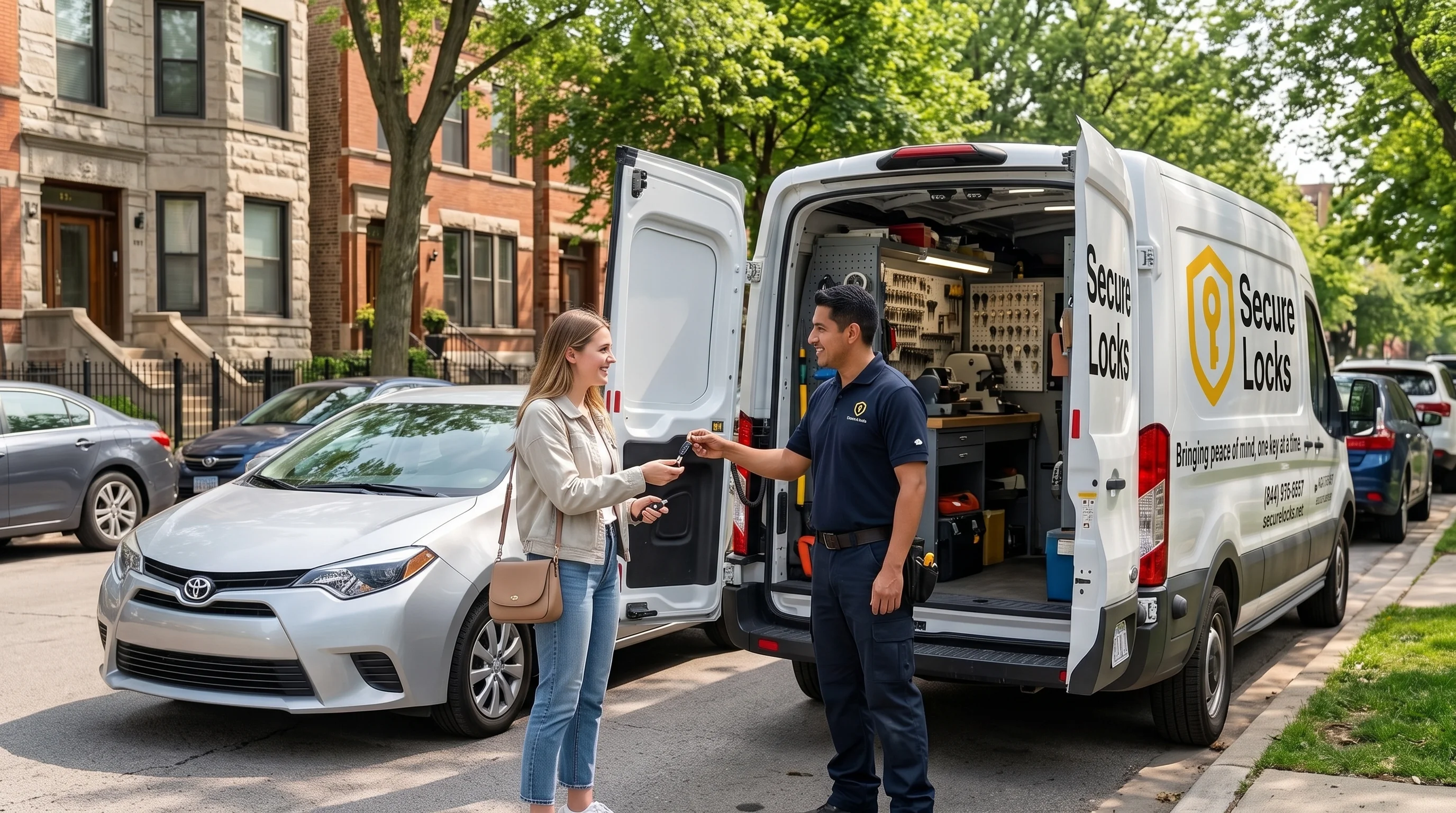
A first car brings a long list of new responsibilities. Insurance, fuel, parking rules and maintenance all arrive at once, and in the middle of that list one small item tends to get skipped: a second key. Many new drivers in Chicago start out with a single key, either because a used car came with only one or because the spare stayed with a parent who never handed it over. Teen Driver Safety Week, which runs October 18 to 24 in 2026, is a natural moment for families to look at that gap. Having duplicate car keys made before anything goes wrong is one of the simplest ways to keep a new driver from getting stranded at school, at work or in a parking lot after dark.
A spare car key does not prevent every problem, but it changes how a lost or broken key plays out. Without one, a missing key can mean a car that cannot be moved, a ride home that has to be arranged on short notice and a replacement process that takes longer than anyone expects. With one, the same situation becomes a phone call and a short wait.
Why a Spare Car Key Matters More for New Drivers
Experienced drivers develop habits around their keys without thinking about them. The keys go in the same pocket every time, get checked before the car door closes and rarely leave the house without a second look. New drivers are still building those habits. Keys get set down on a locker room bench, left in a jacket that gets swapped mid-day or dropped while juggling a backpack, a phone and a coffee. None of this means a new driver is careless. It means the routine is still forming.
Schedules matter too. Teen and new drivers often move between school, practice, part-time jobs and friends' homes in a single day. In a city the size of Chicago, that makes it more likely that a key goes missing somewhere far from home, and more likely that the car is parked in a spot it cannot stay in for long. A spare car key kept in a predictable place turns that kind of day from a crisis into an inconvenience.
The Single-Key Used Car Problem
Many first cars are used vehicles, and used vehicles frequently come with only one key. The second one may have been lost years earlier, kept by a previous owner or never passed along at the sale. Families sometimes do not notice until the day the only key disappears. Checking how many working keys came with the car is a good first step, and if the answer is one, getting a spare should move near the top of the list.
What Duplicate Car Keys Involve Today
The phrase "copy car keys" can be misleading, because most modern keys are not simple copies. Even many basic-looking keys contain a transponder chip that the car's immobilizer must recognize before the engine will start. A blade can be cut to match the locks perfectly and still fail to start the car if the chip has not been programmed. For vehicles with remote fobs or push-button start, the process involves both preparing the electronics and pairing them with the car.
That is why making duplicate car keys for a newer vehicle is usually more than a quick stop at a hardware counter. The key type, the immobilizer system and the model year all shape how the spare is made. Older vehicles with simple mechanical keys may only need a cut blade. Most cars from the last two decades need a transponder key or a programmed fob.
Mechanical Keys, Transponder Keys and Smart Keys
There are three broad categories a family is likely to run into. Mechanical keys are cut metal with no electronics and work only on older vehicles. Transponder keys look like ordinary keys but contain a chip that talks to the immobilizer, and they need programming in addition to cutting. Smart keys and remote fobs handle locking, unlocking and, on many vehicles, keyless start, and they must be paired with the car's systems. Knowing which category the car belongs to sets expectations for the appointment.
Why a Working Key Makes the Job Easier
The best time to copy car keys is while a working key still exists. With one key available, a technician can often use it during the process to cut the blade accurately and to authorize the new key in the car's system. When no working key is left, the job becomes an all keys lost situation, which usually takes more steps and more time. Planning a spare early avoids that harder version of the job entirely.
What to Bring to the Appointment
Expect to show proof of ownership before any key is made. A valid photo ID and the title or current registration are the usual documents. If the car is registered to a parent, that parent may need to be present or provide the documents. The vehicle identification number helps identify the correct key type, and bringing the existing key along makes the job simpler and faster.
Where a New Driver's Spare Car Key Should Live
A spare car key only helps if it can be reached when it is needed. Keeping it on the same ring as the main key defeats the purpose, and leaving it inside the car invites theft. Hiding it in a magnetic box under the bumper is a habit worth avoiding, because those spots are well known.
For most families, the best arrangement is simple. One key stays with the driver, and the spare stays at home in a drawer that everyone in the household knows about. If the new driver regularly parks far from home, such as at a college campus or a downtown Chicago job, it may make sense to keep the spare with a trusted relative or friend who lives closer to that location. The goal is that someone can bring the spare within a reasonable time.
Testing the Spare Once It Is Made
A spare that has never been tried is a guess, not a backup. Once duplicate car keys are made, each one should be tested for every function: locking, unlocking, trunk release, starting the engine and, for keys with a hidden emergency blade, opening the driver's door manually. If the spare has a battery, it is worth checking it every few months, since a fob that sits unused in a drawer can drain over time.
Common Situations Where a Spare Saves the Day
Several everyday scenarios show why the spare matters. A key falls out of a pocket at a football game and the stadium lot is emptying. A key gets locked in the car at a gas station while the engine is running. A fob is dropped in a puddle on the way to class and stops working. A key goes through the washing machine in a pair of jeans. In each case, a spare car key that can be brought to the car turns a stressful afternoon into a manageable one.
Chicago adds its own twists. Street parking comes with time limits and street cleaning schedules, and a car that cannot be moved may collect tickets or be towed. In late fall and winter, snow route rules can make a stuck car a bigger problem than it would be in other months. A new driver who already has a plan for a lost key is far better prepared for those situations.
Teaching Key Habits During Teen Driver Safety Week
Teen Driver Safety Week focuses on safe driving habits, and key habits fit naturally into that conversation. Families can talk about where keys are kept during the day, what to do if a key is lost and who to call if the car cannot be started. It also helps to show a new driver where the emergency blade is on their fob and how to use it if the battery dies. These small lessons take a few minutes and pay off the first time something goes wrong.
What to Do If the Only Key Is Lost
If a new driver loses the only key before a spare has been made, the first step is to stay calm and stay safe. Retracing steps often turns up the key. If it does not, the next step is contacting a qualified automotive locksmith to arrange a replacement, with ownership documents ready. If there is a chance the key was stolen, it is worth asking whether the lost key can be disabled in the car's system once the new one is programmed.
Making Duplicate Car Keys Part of the First-Car Checklist
Most families already have a first-car checklist that covers insurance, registration, emergency contacts and basic maintenance. Adding a spare key to that list takes very little effort and closes one of the most common gaps. The best time to do it is right after the car is bought, while the original key is in hand and nothing is urgent.
For Chicago families welcoming a new driver this fall, Teen Driver Safety Week is a good reminder to count the keys and act if there is only one. A spare car key, tested and stored in a known place, gives a new driver one less thing to worry about and gives parents more peace of mind every time the car leaves the driveway. Arranging duplicate car keys now, while a working key is available, is far easier than replacing the only one later.