

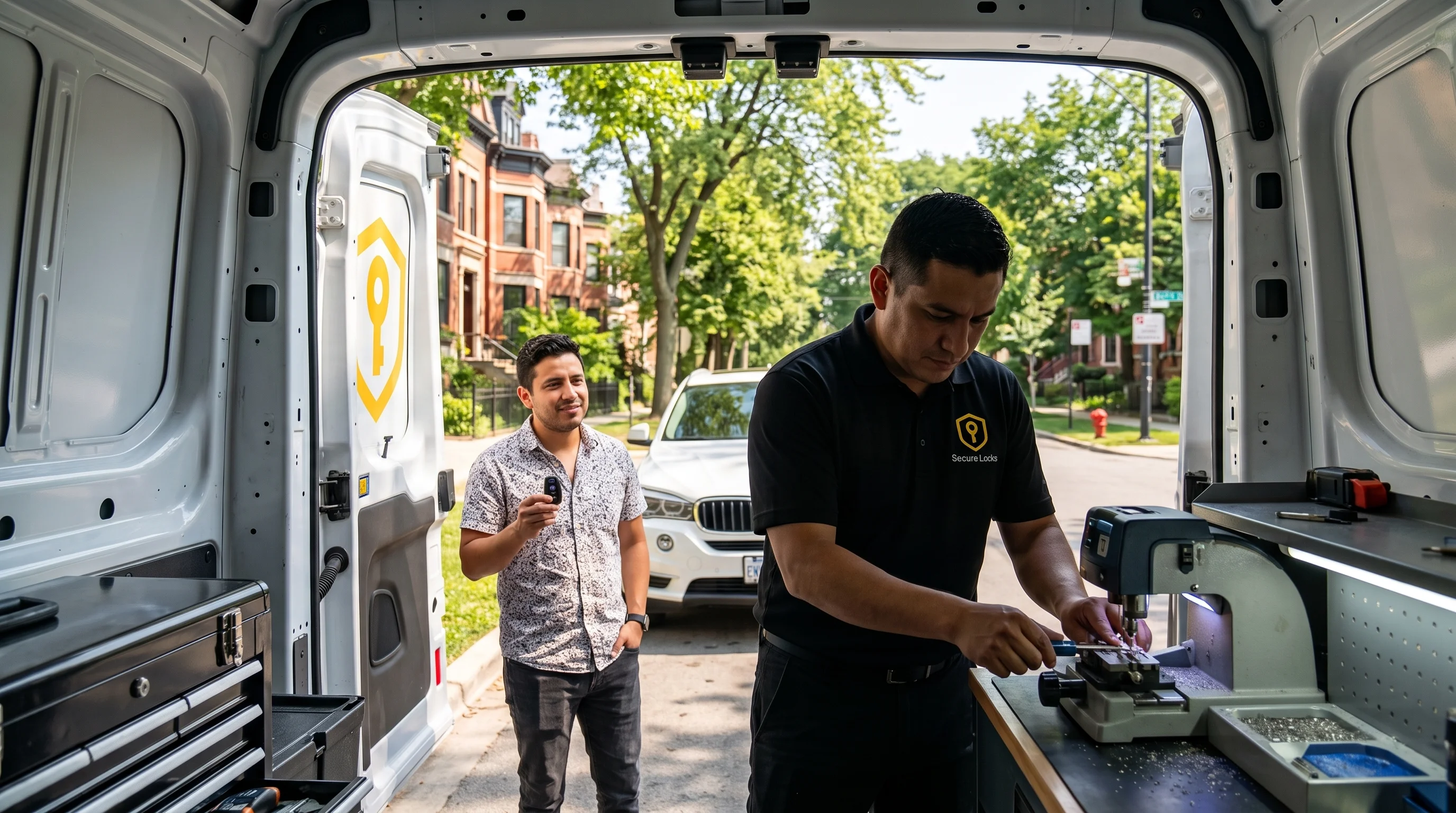
Most BMWs leave the factory with two keys. Over the years, one of them tends to disappear. It gets left in a jacket that was donated, stays behind in a previous home, or simply goes missing without anyone noticing. Many owners in Chicago drive for months or even years with a single key and never think about it, until the day that last key is lost, stolen or damaged. At that point, what could have been a quick appointment becomes an urgent car key replacement with a car that may not be able to move.
The difference between those two situations is larger than most drivers expect. Adding a spare while a working key exists is usually faster, simpler and far less disruptive than recovering from a situation where every key is gone. Understanding why helps explain the value of acting early.
Why One Working Key Makes Such a Difference
A BMW key is authorized through the car's security module, which keeps a record of every key allowed to start the engine. Depending on the model and year, that module might be the older EWS system, the Car Access System known as CAS, or the newer FEM and BDC modules found on later platforms. In each case, the module holds the information that a new key needs to carry.
When a working key is available, a technician with BMW-capable equipment can often use it as part of the process to prepare and authorize a new key. The existing key confirms that the car is being accessed legitimately, and the data needed for the new key can typically be obtained with fewer steps. Without that working key, the technician has to reach the same information by other means, which can take longer and, on some generations, involves more invasive work on the module itself.
What "All Keys Lost" Really Means
In the automotive locksmith world, "all keys lost" describes the situation where no working key remains. It is one of the most involved forms of car key replacement, because it starts from nothing. The car may need to be accessed through the door lock, the security module may need to be read directly, and on some newer models the process may have to go through the manufacturer. The job is still solvable, but it is rarely as quick as adding a spare.
How Adding a Spare BMW Key Usually Works
The process of adding a spare follows a predictable path. Knowing the steps helps owners prepare and understand what to expect during the appointment. It also makes it easier to judge whether a provider is working methodically, since each stage has a clear purpose and a clear result that can be checked before moving on to the next one.
Identifying the Key Type and Security Generation
The first step is identifying which key the car uses and which security system it has. Older BMWs may use a key with a fixed blade, while many later models use a fob with a hidden emergency blade. Some vehicles have Comfort Access, which allows keyless entry and start, and some newer models use a display key with a small screen. The key type determines which blank is needed and which functions have to be programmed.
Preparing and Programming the New Key
With the key type confirmed, the technician prepares a compatible key using data from the car's security module, cuts the emergency blade to match the locks and programs the key to the vehicle. The existing key often plays a role during this stage, which is why the job tends to be much smoother when a working key is present.
Cutting the Emergency Blade
The emergency blade inside a BMW fob opens the driver's door when the fob battery dies. It is easy to forget that the blade exists until the day it is needed. When a spare is made, the blade should be cut accurately and tested in the driver's door lock before the appointment ends, since a poorly cut blade may not be discovered until an emergency.
Testing Every Function
Before the job is considered complete, the new key should be tested for remote lock, remote unlock, trunk release, Comfort Access if equipped, engine start and the emergency blade. Each function relies on a different part of the key, and a spare that works for starting but not for locking is not truly ready.
Why Waiting Makes Car Key Replacement Harder
Waiting until the last key is lost rarely saves anything. The all keys lost situation tends to happen at the least convenient time and in the least convenient place. A key falls out of a pocket on the train, gets left at a bar in Wicker Park, or is stolen along with a bag from a car parked in a busy neighborhood. The car is then sitting somewhere with no key available, and every hour it stays there adds to the stress.
In Chicago, parking pressures make the situation worse. Street parking comes with time limits, permit zones and street cleaning schedules, and winter adds snow route restrictions. A BMW that cannot be moved from a restricted spot may collect tickets or be towed before a replacement key can be arranged. A car parked in a private garage gives the owner more time, but even then, getting to work, school or appointments becomes difficult without the car.
Towing and Downtime
When no key is left, some jobs require moving the car to a service location. Towing adds time and coordination, particularly when the car is inside a garage with height limits or tight ramps. When a qualified locksmith can create a key where the car sits, towing can often be avoided, but that depends on the model and the security system. Having a spare in the first place removes the need to answer these questions under pressure.
Car Key Replacement Planning for BMW Owners
Planning ahead is simple. Owners who realize they have only one key can schedule an appointment at a convenient time, gather their documents and have a spare made without any urgency. The appointment typically requires proof of ownership, such as the title or current registration, along with a valid photo ID. The vehicle identification number helps identify the security generation and the correct key type in advance.
It also helps to ask a few questions before booking. Does the provider regularly work on the specific BMW series? Can the job be completed on site? Will the spare be an original manufacturer key or a compatible aftermarket key, and which functions will it support? Clear answers help avoid surprises.
How the Second Key Usually Goes Missing
Knowing how spares disappear makes it easier to protect the new one. In many households, the second key was handed to a family member who moved out, lent to a friend who never returned it, or placed in a jacket that was later given away. Some owners bought the car used and never received a second key at all, so they have been driving with a single key since the day of purchase. Others simply lost track of it during a move across Chicago, when boxes were packed quickly and small items ended up in the wrong place. In each of these cases, the missing key may still exist somewhere, which is another reason to consider disabling it in the car's memory once a new spare is added.
A Simple Plan for Chicago BMW Owners
The practical plan fits into a normal week. Count the working keys. If there is only one, gather the title or registration, a photo ID and the vehicle identification number. Contact a provider experienced with BMW systems, confirm the series is supported and choose a time when the car is parked somewhere convenient, such as a home driveway or an office garage. Once the spare is made and tested, store it separately from the main key. For drivers who spend much of the day across town from home, keeping the spare with a trusted person closer to work can make it far more useful during an emergency in Chicago traffic.
Where to Keep the Spare
A spare key only helps if it can be reached when needed. Keeping it on the same key ring defeats the purpose, and keeping it inside the car invites theft. A secure spot at home, or with a trusted person who lives nearby, is usually the best option. Checking the spare every few months confirms that its battery still works and that it is recognized by the car.
Disabling a Missing Key
If the original second key was lost rather than simply misplaced at home, it is worth asking whether it can be disabled in the car's memory when the new spare is added. That way, if the lost key is ever found by someone else, it cannot be used to open or start the car. This step adds a layer of security that many owners never think to request.
A Small Step That Prevents a Bigger Problem
Driving with one BMW key works perfectly well right up until it does not. Adding a spare while that key still works is typically quicker, simpler and much less disruptive than dealing with an all keys lost emergency on a busy Chicago street. For owners who have been meaning to take care of it, the best time to act is before the last key goes missing, while car key replacement is still a routine appointment rather than an urgent problem.