

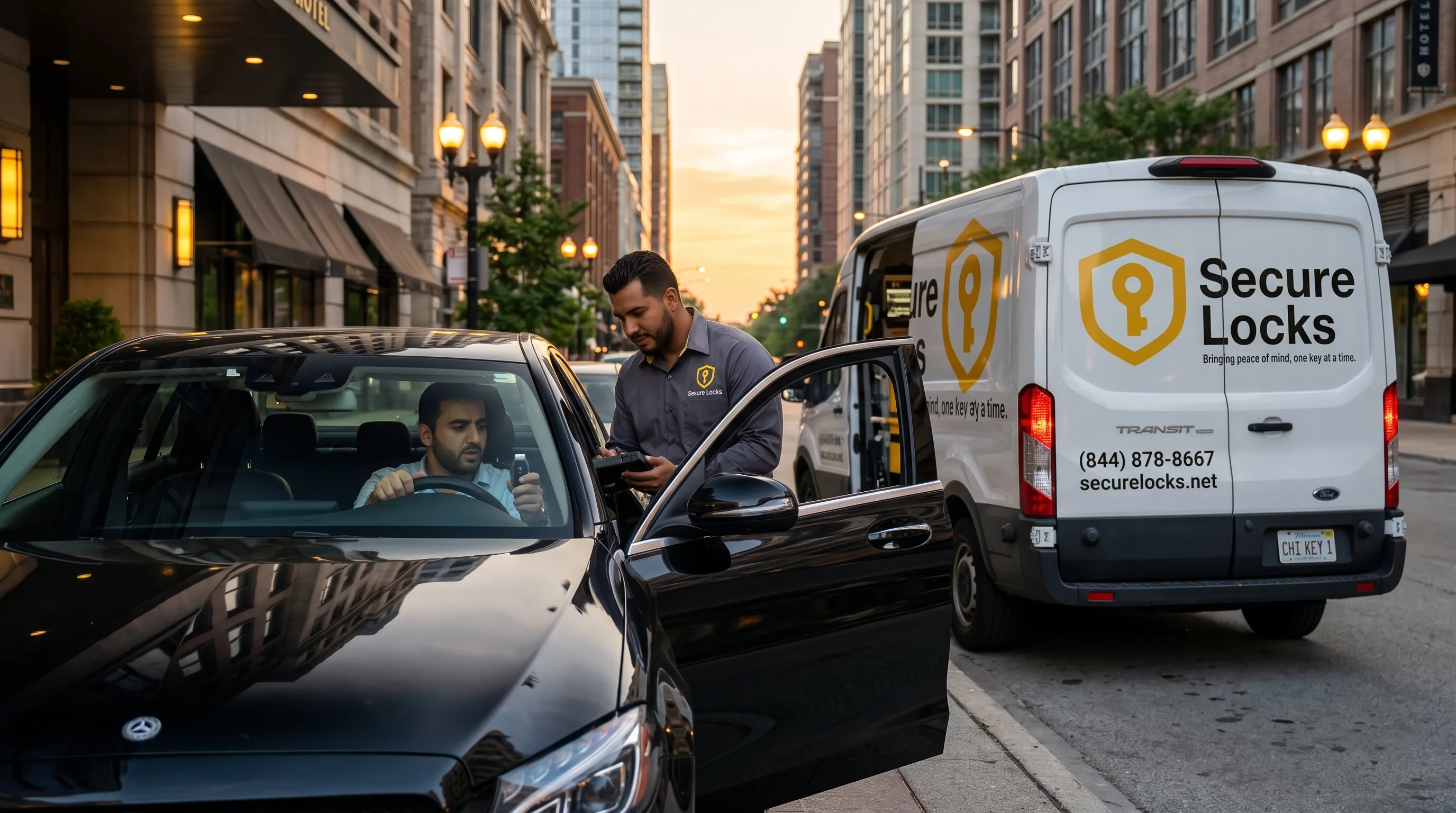
KEYLESS-GO is one of those features that quietly becomes part of daily life. The doors unlock when a handle is touched, the engine starts with a button and the key never leaves the pocket or bag. When the system suddenly reports that the key cannot be detected, the convenience disappears in an instant. The driver is left pressing the start button, trying different door handles and wondering whether the key, the car or something in between has failed. For Mercedes owners in Chicago, reading those symptoms correctly is the fastest way to decide whether the fix is simple, whether the car needs attention, or whether the situation calls for car key replacement.
KEYLESS-GO problems tend to follow recognizable patterns. The specific way the system fails, and the conditions under which it happens, say a great deal about the underlying cause. Paying attention to those details before taking action saves time and prevents unnecessary repairs.
How KEYLESS-GO Finds the Key
Mercedes vehicles with KEYLESS-GO use a network of antennas placed in the door handles, the cabin and the rear of the car. When a door handle is touched or the start button is pressed, the car sends out a low frequency signal asking whether an authorized key is nearby. The key answers with an encrypted response, and the car checks that response against its drive authorization system. If everything matches, the doors unlock or the engine is allowed to start.
This exchange happens in a fraction of a second, which is why the system feels effortless when it works. It also means that anything interfering with either side of the conversation, the car's signal or the key's reply, can stop detection completely. A weak key battery, a failing antenna, heavy radio interference or damage inside the key can all produce the same message on the dashboard.
Why Location Inside the Car Matters
The antennas cover specific zones. Inside the cabin, the car expects to find the key somewhere that its interior antennas can reach. A key tucked into a bag on the rear floor, placed in a metal container or sitting near other electronics may fall outside the zone the car checks during start up. Some detection messages disappear simply because the key is moved closer to the center of the cabin.
Reading the Symptoms
The way KEYLESS-GO fails often points to the cause. Several patterns come up frequently, and each suggests a different next step. Noting which doors respond, whether the remote buttons still work and whether the message appears everywhere or only in certain places gives a much clearer picture than simply knowing that detection failed.
Doors Unlock but the Engine Will Not Start
When touching a door handle unlocks the car but the start button produces a "key not detected" message, the key is clearly communicating at some level. The problem may be the interior antenna, the location of the key inside the cabin, or a key battery that is too weak to respond reliably to the interior signal. Trying the backup start method described in the owner's manual is the most useful test in this situation.
Nothing Responds at All
When neither the door handles nor the start button respond, and the remote buttons on the key also fail, the key's battery or internal electronics are the prime suspects. A car that shows other electrical problems at the same time, such as dim lights or a slow crank, may have a weak vehicle battery instead. Distinguishing between the two usually takes only a few minutes.
One Door Works While Another Does Not
When some door handles unlock the car but others do not, the key is working and the problem likely sits in the antenna or sensor of the unresponsive door. That kind of pattern almost always points to the car rather than the key, and replacing the key would not change it.
Start With the Key Battery
The first step in almost every KEYLESS-GO case is a fresh battery of the exact type specified in the owner's manual. A weakening battery reduces the strength of the key's reply, and KEYLESS-GO is sensitive to that change. The remote buttons may continue to work at close range long after keyless detection has started to fail, which is why owners are sometimes surprised that a battery is the cause.
Chicago winters accelerate battery decline. A battery that seemed fine in the fall may be unable to deliver enough power once the temperature drops, especially if the key spends long periods in a cold car or an outer coat pocket. Replacing the battery at the start of winter is a simple habit that prevents many cold weather detection problems.
Installing the Battery Correctly
A new battery helps only if it is installed correctly. It should face the right direction, sit firmly in its holder and make clean contact with the metal tabs inside the key. Handling the battery by its edges avoids leaving oils on the surfaces. Older stock from the back of a drawer may already be weak, so a fresh battery from a reliable source is the better choice.
Use the Backup Start Method
Mercedes provides a backup way to start the car when the key cannot be detected normally. Depending on the model, this may involve placing the key in a specific marked location in the cabin, or removing the start button on certain older models and inserting the key into the ignition behind it. The owner's manual describes the exact method for each vehicle.
If the car starts with the backup method, the key's encrypted component is still working and the car still accepts it. That strongly suggests the issue is the key's battery, its radio transmission or the car's antennas, rather than a key that has lost its authorization. If the car does not start even with the backup method, the key itself or the car's drive authorization components need a closer look.
Narrowing the Cause Before Car Key Replacement
Once the backup start result is known, two more quick checks usually point clearly at either the key or the car. Both can be done in a driveway, an office garage or a curbside spot in Chicago in just a few minutes, and neither requires tools.
Testing the Spare Key
The spare key offers the clearest comparison. If the spare is detected normally, the main key is almost certainly the problem. If the spare shows the same symptoms, the car is the more likely source. This test is quick and prevents replacing a key that was never at fault.
Ruling Out Interference
Radio interference can disrupt KEYLESS-GO, particularly in dense areas. Busy garages, downtown streets and locations with heavy wireless activity can make detection less reliable. Inside the car, phone chargers, dash cameras and other plug in devices may also create noise. Moving the car, unplugging accessories and keeping the key away from phones and metal objects are simple ways to rule interference out.
When the Car Is the Problem
If a fresh battery, the spare key and a quiet environment all fail to restore normal detection, the vehicle may need attention. Door handle antennas and sensors can fail, particularly on cars that see heavy daily use and harsh weather. Interior antennas can also develop faults. On some older Mercedes models, the electronic ignition switch or the steering lock can cause symptoms that look like key problems. A weak vehicle battery can make any of these systems behave unpredictably.
A technician familiar with Mercedes systems can test the antennas, the ignition components and the vehicle's electrical supply to find the source. Addressing the car directly avoids the frustration of replacing a key only to see the same message return.
When KEYLESS-GO Problems Lead to Car Key Replacement
Replacement becomes the right step when the key is lost or stolen, when its internal electronics have been damaged by water or impact, or when the spare works normally and the main key continues to fail after every other check. A new Mercedes key must be matched to the vehicle through its drive authorization system. On some older generations, a qualified locksmith can prepare a key using specialized equipment. On many newer vehicles, keys are produced for the specific vehicle identification number and then initialized in the car.
The process begins with verifying ownership through a photo ID and the title or current registration. The emergency blade inside the key must be cut to match the vehicle's locks. After the key is initialized, every function should be tested: remote lock and unlock, trunk release, keyless entry at each door, keyless start and the emergency blade in the driver's door. If a key was lost or stolen, it should be disabled so that it can no longer operate the car.
A Clear Order for Chicago Mercedes Owners
The most efficient approach follows a set order. Replace the key battery with the correct type. Move the key to the center of the cabin and away from other electronics. Try the backup start method. Test the spare key. Rule out interference by moving the car or unplugging accessories. Watch for signs of a weak vehicle battery. If the car appears to be at fault, have the antennas and related components inspected.
For drivers across Chicago, where cold temperatures, dense parking environments and heavy daily use all take a toll on keyless systems, most KEYLESS-GO detection problems can be traced to one of these causes. When the evidence points to a damaged or missing key, a properly matched and initialized replacement restores every function, and that is where professional car key replacement becomes the reliable solution.