

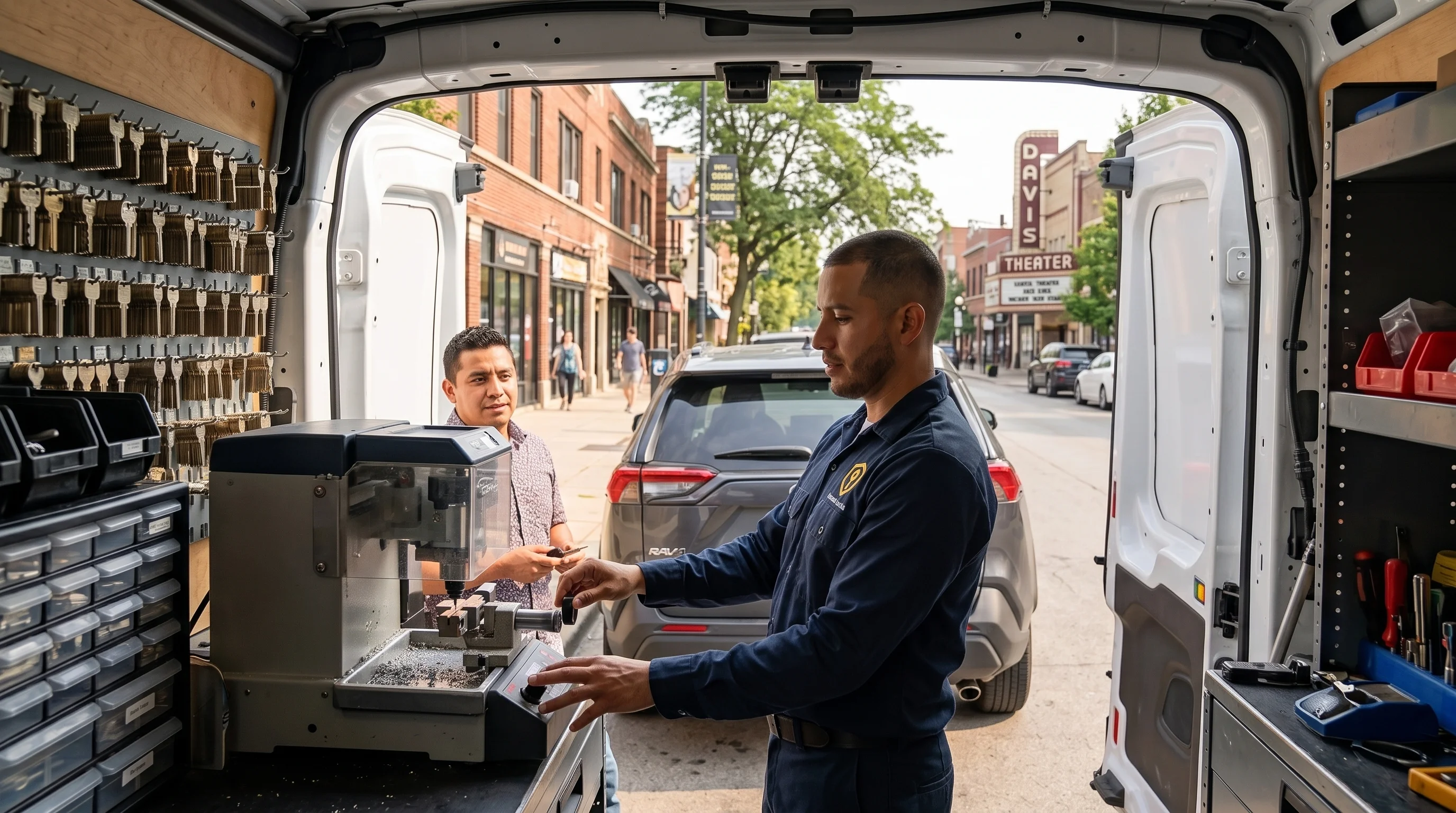
Losing one vehicle key often feels like a minor inconvenience rather than an urgent problem. The spare still works, the car still starts, and daily routines continue without much disruption. That sense of normalcy can be misleading. Once a vehicle is down to a single working key, every drop, misplaced bag, damaged fob, weak battery, or unexpected electronic failure carries more weight because there is no longer a backup waiting at home.
For Chicago drivers, the risk becomes even more practical. Cars are moved between street parking, garages, workplaces, apartment buildings, shopping areas, and busy neighborhoods every day. A single missing key may not create an immediate crisis, but waiting too long to copy car keys can turn a manageable situation into one where access to the vehicle suddenly depends on solving the problem under pressure.
Why Drivers Should Copy Car Keys Before the Last Spare Is Gone
Most drivers do not think much about redundancy until it disappears. When two working keys are available, losing one still leaves a backup. When only one remains, the situation changes completely. That last key is no longer simply the primary key; it becomes the only path to unlocking, starting, and operating the vehicle.
The safest time to copy car keys is usually while at least one fully functional key is still available. Depending on the vehicle, creating another key may involve cutting a blade, programming a transponder chip, pairing a remote, configuring a proximity fob, or performing several of these steps together. Having a working key available can simplify verification and reduce uncertainty about how the replacement should function.
Copy Car Keys Before Daily Wear Becomes a Bigger Risk
A key that works every day can still be deteriorating. Buttons can soften, shells can crack, blades can wear, batteries can weaken, and internal electronics can become less reliable after years of use. Because these changes often happen gradually, drivers may continue using the same key long after its condition has started to decline.
That matters more when no second key exists. If the only remaining key begins acting strangely, the driver has lost the safety margin that a spare would normally provide. Chicago commuters who rely on the same vehicle every day are especially exposed to that problem because even a short interruption can affect work schedules, school pickups, appointments, or travel plans.
Copy Car Keys Before a Misplaced Spare Becomes a Lost Spare
Many keys are not permanently lost at first. They are simply misplaced. A spare might disappear into a drawer, jacket pocket, backpack, storage box, or household move and remain missing for weeks or months. Because the vehicle still works with the remaining key, searching for the spare gradually becomes less important.
That delay can create an avoidable problem. If the missing key never turns up and the remaining key is later lost or damaged, there is no fallback. Making another key while the current one is still available can restore the redundancy that was lost when the original spare disappeared.
How Modern Vehicles Change the Way Drivers Copy Car Keys
Copying an older mechanical key was often a straightforward cutting task. Modern automotive keys can be very different. Many vehicles now use transponder chips, remote controls, push-to-start systems, rolling-code technology, or proximity features that communicate electronically with the vehicle.
Because of that, a duplicate that looks identical may still fail to start the car if the electronic components are not properly configured. Drivers who want to copy car keys should think about the full function of the key, not just whether the blade fits the door.
Copy Car Keys With the Correct Transponder Programming
A transponder key contains a chip that communicates with the vehicle’s immobilizer system. When the key is inserted or brought close enough to the vehicle, the system checks whether the chip is authorized. If the code is not recognized, the doors may unlock mechanically while the engine remains disabled.
This is why duplicating the physical shape of the blade is only one part of the process for many vehicles. When a transponder is involved, programming becomes essential to creating a truly functional backup.
Copy Car Keys With Remote and Proximity Functions in Mind
Some drivers use the phrase copy car keys to describe a complete replacement fob, not just a metal blade. That distinction matters. A remote may need to lock and unlock the doors, open the trunk, trigger a panic function, or communicate with a push-button start system.
For Chicago drivers using late-model vehicles, those features are often part of normal daily operation. A duplicate that only performs one function may not provide the same level of convenience or reliability as the original key.
When Car Key Replacement Becomes More Important Than Waiting
Once a vehicle is down to one working key, car key replacement becomes less about reacting to a failure and more about preventing one. The goal is not simply to create another object that fits the ignition. It is to restore a dependable backup before the last working key becomes unavailable.
This is especially important when the remaining key already shows signs of wear. A cracked shell, weak button response, intermittent detection message, bent blade, or inconsistent starting behavior reduces the reliability of the only key left. At that point, delay adds unnecessary risk.
Copy Car Keys Before the Last Key Starts Failing
A driver who already lost one key may assume the remaining key can be used indefinitely. That assumption becomes risky if the surviving key is old, damaged, or unreliable. The most useful moment to copy car keys is often before there is any emergency at all.
If the vehicle still recognizes the key normally, the buttons work, and the blade or fob remains intact, creating a backup can usually be approached methodically. Waiting until the last key no longer starts the vehicle changes the problem from preventive to urgent.
Why Chicago Drivers Face Extra Reasons to Keep a Spare
Chicago presents practical conditions that make having a backup key especially useful. Vehicles may be parked several blocks from home, left in garages, moved for street cleaning, used for commuting, or driven between neighborhoods throughout the day. Losing the only working key in one of those situations can create far more disruption than losing it in a controlled environment.
Seasonal weather also matters. Gloves, heavy coats, bags, snow, and hurried transitions between vehicles and buildings can make it easier to misplace or drop keys. None of these conditions guarantees a loss, but they increase the number of everyday moments when a backup can become valuable.
Copy Car Keys Before Chicago Winter Exposes Weaknesses
Cold weather can reveal problems that were less noticeable in mild conditions. Weak fob batteries may become less dependable, older plastic housings may feel more brittle, and a remote that already had limited range may become even less convenient.
A Chicago winter is not automatically the cause of a failing key, but it can make an existing weakness harder to ignore. If the only working key already has visible damage or inconsistent electronics, waiting until the coldest part of the year to create a backup adds unnecessary uncertainty.
Copy Car Keys Before Busy Chicago Parking Situations Create Pressure
Parking in Chicago can involve garages, curbside spaces, apartment lots, work facilities, and high-traffic commercial areas. A misplaced key in one of those settings can quickly turn into a stressful search, particularly when there is no duplicate available.
Keeping a functional spare in a secure location gives the driver another option. The spare does not need to travel in the same bag or pocket as the primary key; in fact, storing both together defeats much of the purpose of having redundancy in the first place.
Common Mistakes Drivers Make When They Copy Car Keys
Creating a spare key sounds simple, but several mistakes can reduce the usefulness of the duplicate. The most common is waiting until the last working key is already unreliable. Another is assuming that any key with the correct blade shape will perform all the same functions as the original.
Drivers may also fail to test the new key completely. A duplicate should not be considered ready simply because it unlocks the door. The key should be checked for every intended function, including locking, unlocking, trunk access, ignition, push-button starting, and any remote features the vehicle supports.
Copy Car Keys and Test Them Before Storing the Spare
A newly created key should be verified before it is put away for months. This is particularly important for electronic keys because the driver may not discover a programming issue until the backup is urgently needed.
Testing both the physical and electronic functions confirms that the spare can actually serve as a replacement when necessary. For a Chicago driver who relies on the vehicle every day, that small step can prevent a much bigger inconvenience later.
Copy Car Keys Without Storing Both in the Same Place
A spare only provides protection if it remains separate from the primary key. Keeping both keys on the same ring, in the same purse, or inside the same backpack creates a single point of failure.
If that bag is lost or stolen, both keys disappear together. A better approach is to keep the duplicate in a secure location that is accessible when needed but separate from the key used every day.
What to Check Before You Copy Car Keys
Before creating another key, it helps to inspect the one that will be used as the reference. Look for cracks, worn buttons, bent blades, loose battery covers, intermittent remote response, or starting problems. If the current key is already malfunctioning, the underlying issue should be understood rather than automatically duplicated.
It is also useful to confirm the vehicle’s year, make, model, and key type. Different trims and production years can use different systems even within the same vehicle family. That information helps ensure the replacement matches the correct technology.
Copy Car Keys With the Vehicle’s Full Functionality in Mind
A proper backup should match the way the vehicle is actually used. If the original key includes remote entry, proximity detection, or push-to-start functionality, the spare should be evaluated with those same functions in mind.
This is one reason car key replacement can involve more than cutting metal. The electronic side of the key is often just as important as the physical blade.
Copy Car Keys Before a Damaged Shell Affects the Electronics
A cracked shell can expose internal components to moisture, dirt, and repeated movement. Even if the electronics still work, continued use can place additional stress on the circuit board, buttons, or transponder components.
When the only remaining key is physically deteriorating, making a reliable backup becomes more urgent because the driver no longer has much protection against sudden failure.
Copy Car Keys While the Current Key Still Works Reliably
The simplest time to solve a spare-key problem is before the current key becomes a problem itself. When the vehicle recognizes the key consistently, the buttons respond normally, and the key is physically intact, duplication can be treated as preventive maintenance rather than an emergency.
That is the central advantage of acting early. Drivers do not need to predict exactly when a key might fail; they only need to recognize that one remaining key creates more exposure than two.
A Working Spare Gives Chicago Drivers More Control
Losing one key does not automatically create an emergency, but it should change how the remaining key is treated. Once only one working key remains, every future loss, break, programming issue, or electronic failure has greater consequences.
For Chicago drivers, the practical answer is to restore redundancy before the situation becomes urgent. Choosing to copy car keys while the current key still works can reduce the chance of being left without vehicle access at the worst possible time. A dependable spare also makes future key problems easier to manage because there is still a functional backup available while the original key is being inspected, repaired, or replaced.
When the surviving key is already worn or unreliable, car key replacement may be the more appropriate path. Either way, acting before the last working key disappears is usually the smarter move than waiting until there is no backup left.