

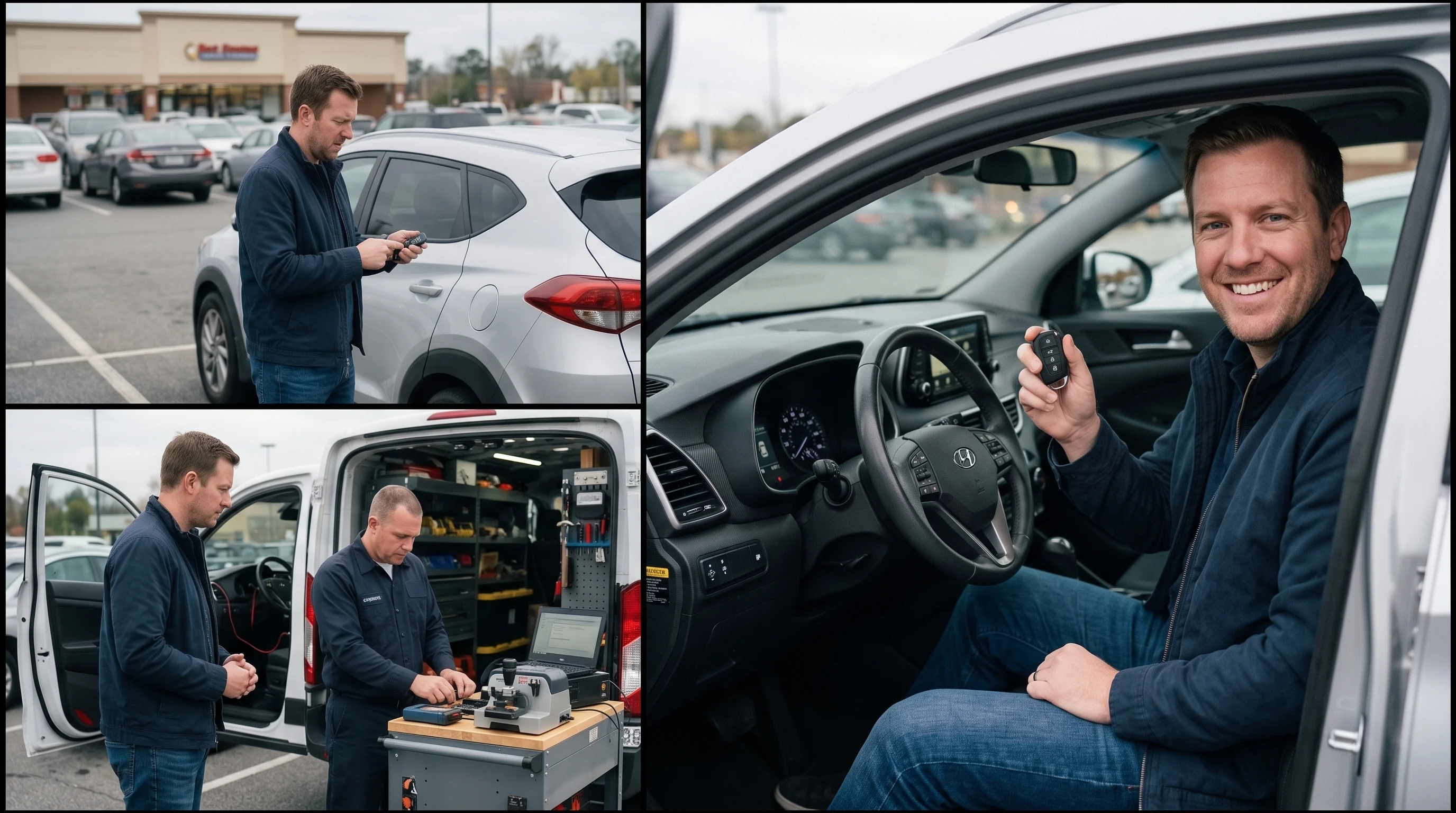
When a Hyundai key fob starts acting up, the first instinct is usually to swap the battery and move on. That fix works sometimes. But when the buttons stay unresponsive after a fresh battery, or when only certain functions fail while others work intermittently, the problem often runs deeper. For Hyundai drivers in Chicago navigating busy streets, parking garages, and unpredictable weather, a partially functioning key is more than an inconvenience. It can be a genuine safety concern.
Understanding the difference between a fixable issue and a key that has reached the end of its useful life is the first step toward getting back on the road without frustration.
When a Battery Swap Is Not Enough for Car Key Replacement
Replacing the battery is the simplest diagnostic step, and it resolves a large percentage of unresponsive key fob complaints. However, if the key still fails to respond after a new battery is installed correctly, the internal circuitry may be compromised. Chicago winters are particularly hard on electronics. Repeated exposure to moisture, freezing temperatures, and road salt can work their way into the key fob casing over time, corroding the circuit board or damaging the microchip that communicates with the vehicle.
Signs that the battery is not the issue include:
- Buttons that feel physically normal but produce no responseSigns that the battery is not the issue include:
- Buttons that feel physically normal but produce no response
- Inconsistent range, where the fob works only when held directly against the door handle
- One button functioning while others do not
- The key fob working occasionally and then failing again without a clear pattern
Any of these patterns suggests internal component failure rather than a simple power problem. At that point, exploring a full Hyundai key replacement becomes the more practical path forward.
Physical Damage That Leads to Full Car Key Replacement
Key fobs take a beating in everyday use. Dropped on hard floors, tossed into bags with loose change, or left in pockets during a wash cycle, these small devices endure conditions they were never designed for. Cracks in the casing may seem cosmetic, but they allow moisture and debris to reach the internal components directly.
Chicago drivers who commute daily through rain, snow, and slush are especially susceptible to this kind of gradual damage. Even a hairline crack in the fob housing can become a significant vulnerability during a wet winter commute. Once the internal board is affected, button contacts corrode or break entirely, and no amount of cleaning or drying will restore full functionality.
If the physical casing is visibly damaged, cracked, or warped, a replacement key is typically the more reliable solution compared to attempting a repair that may fail again within weeks.
Transponder Issues and Car Key Replacement Needs
Modern Hyundai vehicles use transponder technology that links the key electronically to the vehicle's immobilizer system. This chip must communicate correctly with the car's onboard computer for the engine to start. When the transponder chip fails or becomes desynced, the vehicle may not recognize the key at all, even if the mechanical portion functions correctly.
This is a distinct problem from a faulty fob button. A driver might be able to unlock the door manually with the physical key blade but find the car refuses to start because the transponder signal is not registering. Understanding why your car key isn't working and how to fix it can help clarify whether the issue is mechanical, electronic, or both.
Transponder failures require professional reprogramming or a full key replacement. This is not a DIY repair, and attempting to force the issue can sometimes trigger additional security lockouts on the vehicle's computer.
The Hyundai Tucson and Other Models: Key Differences Matter
Not all Hyundai keys are the same. Drivers of a Hyundai Tucson may have a different key fob design compared to older Hyundai sedans or newer models with proximity entry. Smart key systems, which allow push-button starting without inserting a key, use a different communication protocol than standard transponder fobs. When these systems fail, the diagnostic process is more involved.
Proximity keys in particular can experience signal interference from other electronic devices, low battery output that does not trigger a "low battery" warning, or antenna issues within the vehicle itself. Ruling out vehicle-side problems is part of a proper diagnosis before committing to a replacement key.
When Repair Options Run Out: Knowing It Is Time for a New Key
There is a practical point at which continued attempts to repair a failing Hyundai key cost more in time and effort than simply getting a replacement. That point arrives when:
- The key has already been repaired once and is failing again
- Multiple buttons are non-functional regardless of the battery condition
- The fob has sustained water damage or physical impact
- The vehicle's security system is no longer recognizing the key reliably
For Chicago drivers who depend on their vehicles for daily commutes, rideshare work, or family transportation, waiting too long to address a failing key creates unnecessary risk. Losing complete access to a vehicle in a parking structure downtown or on an expressway ramp is a scenario that can be avoided with proactive action.
The step-by-step guide to the car key replacement process outlines what to expect when working with an automotive locksmith, from key identification through programming and testing.
Spare Keys and the Chicago Case for Having a Backup
One of the most practical takeaways for any Hyundai owner in Chicago is the value of having a spare key before an emergency occurs. Chicago's urban environment means vehicles are used frequently, parked in varied conditions, and exposed to weather extremes across all four seasons. A key that functions well in September may begin showing signs of wear by February.
Getting a spare programmed while the original key still works is significantly easier and often less expensive than an emergency replacement when the primary key has already failed completely. Automotive locksmiths in the Chicago area can typically program a spare key on-site, without a dealership visit or extended wait times.
For a broader look at available options, the car key replacement services page covers the range of key types and programming solutions available for Hyundai vehicles and other makes across the Chicago metropolitan area.
Recognizing the Signs Before It Becomes an Emergency
The most important takeaway for any Hyundai driver in Chicago is this: key fob problems rarely resolve themselves. Intermittent failures tend to become permanent failures over time, and a key that works inconsistently today may stop working entirely at the least convenient moment.
Paying attention to early warning signs, such as reduced range, unresponsive buttons after a battery change, or a vehicle that hesitates to recognize the key, gives drivers the opportunity to address the problem on their own schedule rather than in a roadside emergency. Automotive locksmiths serving Chicago can assess whether the issue requires a simple repair or a complete key replacement, providing a clear path forward without unnecessary delays.