

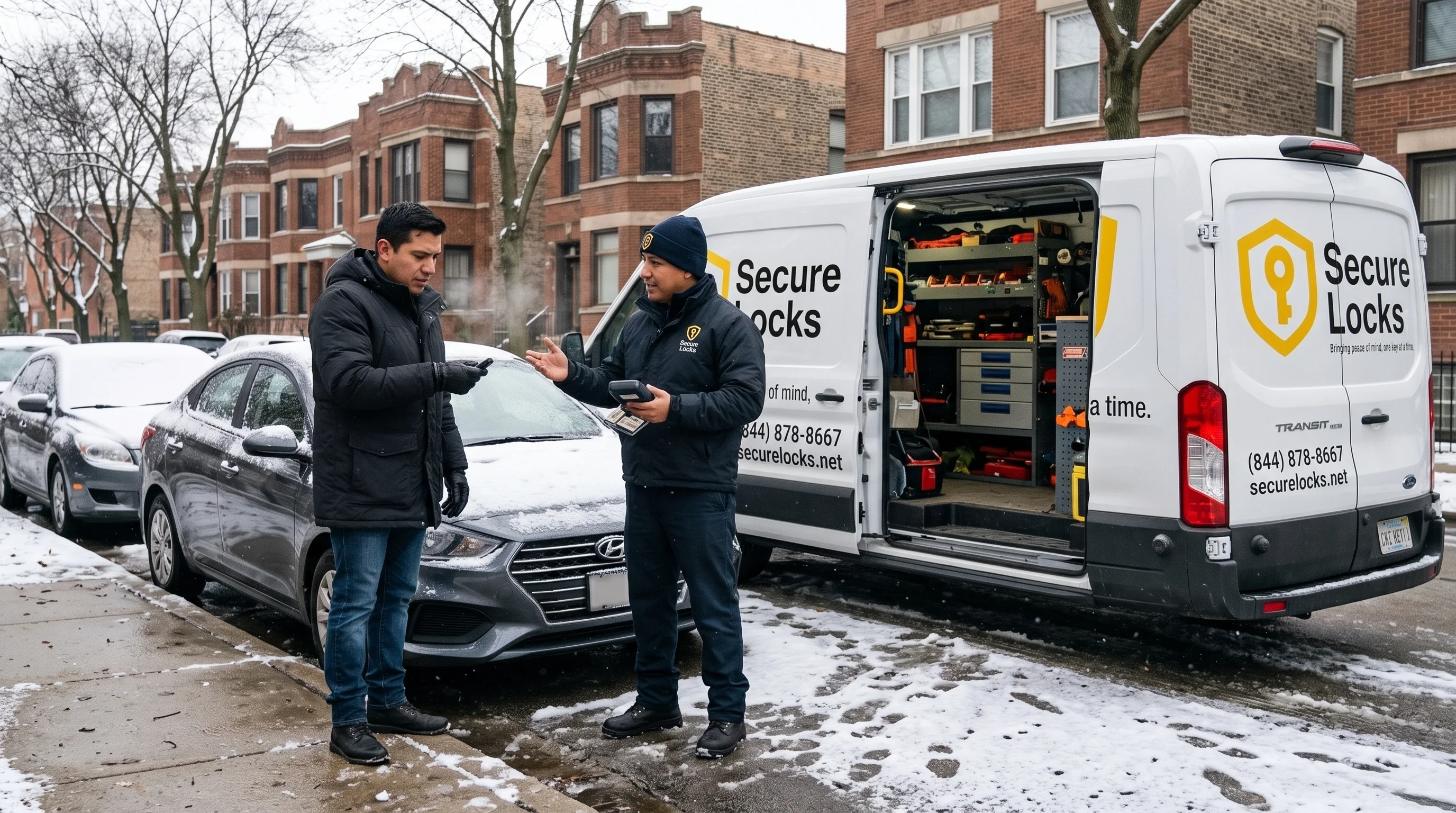
The first snow of the season tends to reach Chicago somewhere between late October and November, and it rarely arrives gently. Streets turn to slush, side streets fill with plowed snow and drivers rediscover all the small winter problems they forgot about since spring. Car keys are near the top of that list. Fobs get dropped into snowbanks, door locks freeze, remote buttons stop responding and push-button starts report that no key can be found. Some of these problems have quick fixes. Others are the first sign that a car key replacement will be needed before the winter is over.
Knowing what to check first, and what each symptom points to, helps drivers decide whether to wait for warmer weather, try a simple fix or call for help. A short checklist for the first snow can save a lot of standing around in the cold.
Why the First Snow Causes So Many Key Problems
The first snowfall combines several stresses at once. Temperatures drop low enough to weaken fob batteries. Moisture from snow and slush gets into pockets, bags and fob housings. Plow piles and slush make it easy to lose a key that slips out of a hand or a pocket. Door locks and handles that worked fine all summer can freeze shut overnight. Each of these issues is manageable on its own, but together they make the first snow a common day for key trouble.
Drivers are also out of practice. After months of mild weather, few people remember where the emergency blade is on their fob, how the backup start method works or whether the spare key still has a working battery. The first snow is often when those details suddenly matter.
A Key Lost in the Snow
A key dropped in fresh snow can be surprisingly hard to find, and a key pushed into a plow pile may not surface until a thaw. If a key goes missing near the car, it is worth searching carefully along the path from the door, around the tires and under the car before assuming it is gone. If the search fails, the next step depends on whether a spare exists. With a spare, the car can be moved and the replacement handled later. Without one, the car may need a key made where it sits.
A First-Snow Checklist for Car Keys
When a key or fob stops cooperating on a snowy morning, working through a few steps in order often solves the problem or narrows the cause. The steps below start with the simplest fixes and move toward the ones that need professional help, so a driver can stop as soon as the car is working again.
Warm the Fob and Replace a Weak Battery
Cold reduces battery output. Warming the fob in a hand or an inside pocket for a few minutes can restore enough power to work the buttons. If that helps, the battery is weak and should be replaced with the type listed in the owner's manual. A fresh battery at the start of winter prevents many repeat problems.
Dry a Wet Fob Carefully
A fob that fell into slush or snow should be dried as soon as possible. Opening the housing, removing the battery and letting the parts dry at room temperature gives moisture a chance to escape before it causes corrosion. Heating the fob with a hair dryer or placing it on a radiator can damage the plastic or the circuit board, so gentle, patient drying is the safer approach.
Use the Backup Start Method
Vehicles with push-button start usually have a backup method for weak fob batteries, described in the owner's manual. On many cars, the fob is held near the start button or placed in a specific spot where the car can read it at close range. If the car starts this way, the fob's transponder still works and the issue is power or signal.
Deal With a Frozen Lock Gently
If the door lock or handle is frozen, forcing the emergency blade into the cylinder can bend or break it. A commercial lock de-icer or gently warming the blade before inserting it usually works better. Pouring hot water on a frozen lock is a bad idea, since the water can refreeze deeper inside the mechanism.
When Car Key Replacement Is More Likely Than a Weather Fix
Some symptoms point beyond the cold. If a fresh battery does not help, if the fob works only intermittently even indoors or if the car does not recognize the key using the backup start method, the fob or the car may have a deeper problem. Moisture damage, a cracked circuit board from a drop or worn contacts can all cause failures that the weather simply exposes.
In those situations, a mobile car locksmith in Chicago can come to the vehicle, test the fob and the car's systems and determine what is wrong. That matters in winter, when a car that cannot start may be stuck on a snow route or in a spot that needs to be cleared for plows.
When Key Fob Programming Is Needed
A new or repaired fob often needs key fob programming before it works with the car. Programming introduces the key to the car's immobilizer and pairs its remote functions. The method varies by make, model and year. Many vehicles can be handled on site with the right equipment, while some newer systems involve additional steps. A technician will verify ownership with a photo ID and the title or registration before any work begins.
Lost Keys and Disabling the Old One
If a key was lost rather than damaged, it is worth asking whether the lost key can be removed from the car's memory once the new key is programmed. Most modern systems allow this, and it prevents anyone who finds the old key from using it to open or start the car.
Why a Mobile Car Locksmith Helps in Winter
Winter makes towing harder. Tow trucks are in high demand after snowstorms, side streets may be narrowed by plow piles and a car parked under a snowbank can be difficult to reach. A mobile car locksmith brings the cutting and programming equipment to the vehicle, which means the car can often stay where it is while a new key is made and tested.
This is especially useful for drivers who park on the street, in shared building lots or in workplace garages. Instead of waiting for a tow and then waiting again for a key, the job can usually be handled in a single visit, depending on the vehicle and the situation. That is a real advantage over the dealership route, which after a snowstorm usually means a tow to the service department and another wait while the key is ordered and programmed.
What Car Key Replacement Involves in Winter
When a key is gone or damaged beyond repair, the replacement follows the same basic steps in any season, but winter adds a few practical considerations. The technician needs enough room around the driver's door to work and connect programming equipment, so clearing snow from that side of the car before the appointment helps. The car's battery should be in reasonable shape, since programming depends on stable voltage and cold weather already strains it. Ownership documents should be ready, and it helps to share the make, model and year when booking so the right key blank is on hand. Once the key is cut and programmed, every function should be tested in the cold, including remote locking, keyless start and the emergency blade, so there are no surprises on the next frozen morning in Chicago.
Preparing Before the Next Snowfall
The first snow is a good reminder to get keys ready for the rest of the season. Replace fob batteries that are more than a year or two old. Confirm that a spare key exists, works and is stored in a place someone can reach. Find the emergency blade on each fob and practice the backup start method once in a calm moment. Keep a small bottle of lock de-icer at home or in a bag rather than inside the car, where it cannot help with a frozen door.
Spare Keys for Snow Season
A spare key is the most effective backup for winter. When a fob fails or disappears in the snow, a spare stored at home or with a trusted person nearby can get the car moving within a short time. Drivers with only one key should consider adding a spare before the heavy snow months arrive.
Getting Through the First Snow Without Key Trouble
The first snow in Chicago brings the same handful of key problems every year: weak batteries, wet fobs, frozen locks and keys lost in plow piles. Most of them can be handled with a warm hand, a fresh battery, gentle drying and a spare key. When those steps do not work, or the key is gone entirely, a qualified technician can test the fob and the car, complete key fob programming and arrange car key replacement so the driver can get back on the road before the next storm.