

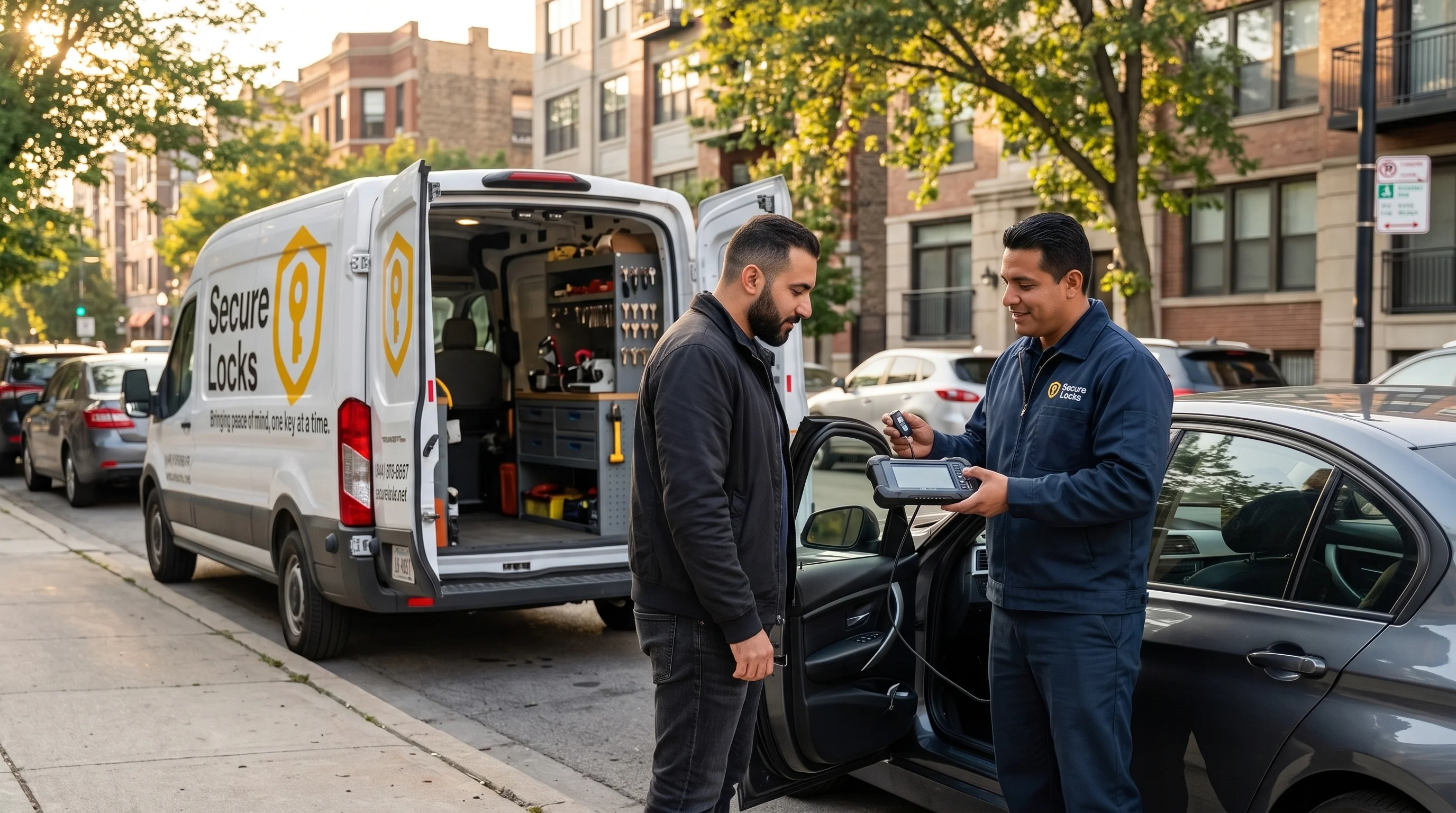
When a BMW key is lost, damaged or simply worn out, one of the first questions owners ask is whether the new key will need programming or whether it can simply be cut and used. The answer depends on what kind of key the car uses, what exactly is being replaced and how the car's security system is built. For nearly every BMW on Chicago roads today, a new key that starts the engine must be programmed or coded to the vehicle. There are a few exceptions where programming is not needed, but they apply to specific situations rather than to car key replacement in general. Knowing the difference helps owners understand what the job involves and avoid buying parts that will not work.
BMW has used several generations of key security over the years, from the older EWS system to the Car Access System known as CAS and the newer FEM and BDC body control modules. Each generation stores information about authorized keys, and each requires a new key to be introduced before the engine will start.
Why BMW Keys Need Programming
A modern BMW key performs two separate jobs. The remote portion sends lock, unlock and trunk commands. The transponder portion identifies the key to the car's security module, which checks it against a stored list of authorized keys before allowing the engine to start. A key that is not on that list will not start the car, no matter how perfectly its blade matches the locks.
Programming, often called coding in the BMW world, is the process of preparing a key with the correct data and adding it to the security module's list. On many vehicles, this involves reading information from the module and writing it to the new key. Without that step, the key is effectively a stranger to the car.
The Difference Between Cutting and Coding
Many BMW fobs contain a hidden mechanical blade for the driver's door and, on some models, the glovebox. Cutting that blade to match the locks lets the key open the door manually, but it does nothing for the engine. This is a common source of confusion: a key that opens the door feels finished, yet it will not start the car until the electronics are coded. Both steps are needed for a complete key.
When a Replacement Key Does Not Need Programming
There are a few situations where a new part does not require programming, and knowing them prevents unnecessary work. Each of them involves keeping the original electronics in service rather than introducing a new transponder, which is why the car continues to recognize the key without any change to its security module.
Replacing Only the Housing
If the key's electronics still work but the shell is cracked, the buttons are worn or the battery cover is broken, the original circuit board can often be moved into a new housing. Because the board and transponder are the same ones the car already recognizes, no programming is needed. The emergency blade may be transferred or cut to match, and the key works as before.
Replacing the Battery
A new battery restores power to the remote and keyless functions but does not change the key's identity. In most cases, no programming is needed after a battery change. On a small number of older models, the remote may need to be resynchronized with the car after the battery is replaced, which is usually a simple procedure described in the owner's manual.
Cutting a Blade for the Door Only
If the goal is simply to have a mechanical key that opens the driver's door, for example as a backup for a dead fob battery, a blade can be cut without programming. That blade will not start the car, but it can provide access in an emergency.
Display Keys and Rechargeable Batteries
Some newer BMW models use a display key with a rechargeable battery. A display key that stops responding often needs a full charge rather than replacement. Charging it does not affect its programming, and it should return to normal once powered.
When Programming Is Always Required
Any time a new key needs to start the engine, programming is required. That includes replacing a lost key, replacing a stolen key, adding a spare and replacing a key whose circuit board or transponder has failed. It also includes situations where a used key from another BMW is being considered, since BMW keys are tied to the vehicle they were prepared for and generally cannot be reused on a different car without the correct process.
Car Key Replacement With One Working Key
When at least one working key exists, adding a new key is usually straightforward. A technician with BMW-capable equipment can often use the existing key as part of the process, prepare the new key, cut its blade and code it to the car in a single visit. This is the simplest and most predictable version of car key replacement for a BMW.
All Keys Lost
When no working key remains, the job involves more steps. The technician must cut the blade by code or by decoding the lock and obtain the data needed for the new key without an authorized key present. On some generations, that requires accessing the security module more directly. The job is still solvable, but it takes longer than adding a spare.
What the Car Key Replacement Process Looks Like
The process usually starts with verifying ownership through a photo ID and the title or current registration. The vehicle identification number identifies the model year and security generation, which determines the correct key and procedure. The technician then prepares the key, cuts the emergency blade, codes the key to the car and tests every function.
This can all be done on site by an automotive locksmith equipped for BMW, from older CAS vehicles to the newer FEM and BDC generations. Newer models sometimes involve additional steps, which the technician confirms in advance. In Chicago, where many cars are parked on the street or in shared garages, on-site programming saves owners from arranging a tow when no key is available.
Testing Before the Job Is Complete
A properly programmed key should be tested for remote lock and unlock, trunk release, Comfort Access if equipped, engine start and the emergency blade in the driver's door. Each function relies on a different part of the key, and testing them all before the technician leaves prevents surprises later.
Disabling Lost Keys
If a key was lost or stolen, it is worth asking whether it can be removed from the car's memory once the new key is programmed. That prevents anyone who finds the old key from using it to open or start the vehicle, which matters in busy Chicago neighborhoods and parking areas.
Common Misconceptions About BMW Key Replacement
Several misconceptions lead owners down the wrong path. One is that a key bought online will work after a simple pairing at home. Most BMW keys require specialized equipment to code. Another is that cutting a new blade is enough. It only opens the door. A third is that a key that stopped working after being dropped only needs a new battery. Impact damage to the circuit board often requires a new key.
How Long BMW Key Programming Usually Takes
Owners often want to know how long the car will be out of action. When at least one working key exists, a locksmith equipped for BMW can usually prepare, cut and code a new key in a single visit, and the car is ready to drive as soon as every function has been tested. An all keys lost situation takes longer, since the blade has to be cut by code or by decoding the lock and the security module has to be accessed without an authorized key present. Even then, the work typically happens where the car is parked, so there is no tow and no waiting for a key to arrive. By comparison, ordering a key through a dealership usually means several days of waiting, an appointment in the service department and, when no key is available, a tow to get the car there. Sharing the model year, the vehicle identification number and the car's location when calling gives the technician what they need to bring the right key and equipment, which keeps the visit as short as possible.
Why the Model Year Matters
BMW's security systems have changed several times, and the correct key and procedure depend on the generation. Two BMWs that look similar from the outside may use very different systems. Sharing the model year and vehicle identification number when booking helps the technician arrive with the right key and plan.
What Chicago BMW Drivers Should Remember
A replacement BMW key almost always needs programming if it is going to start the engine. Housing swaps, battery changes and door-only blades are the main exceptions. Adding a spare while a working key exists is the simplest route, and an all keys lost situation takes more time. For Chicago drivers, planning ahead with a spare, sharing accurate vehicle details and choosing a provider experienced with BMW systems turns car key replacement into a routine appointment rather than an emergency.