

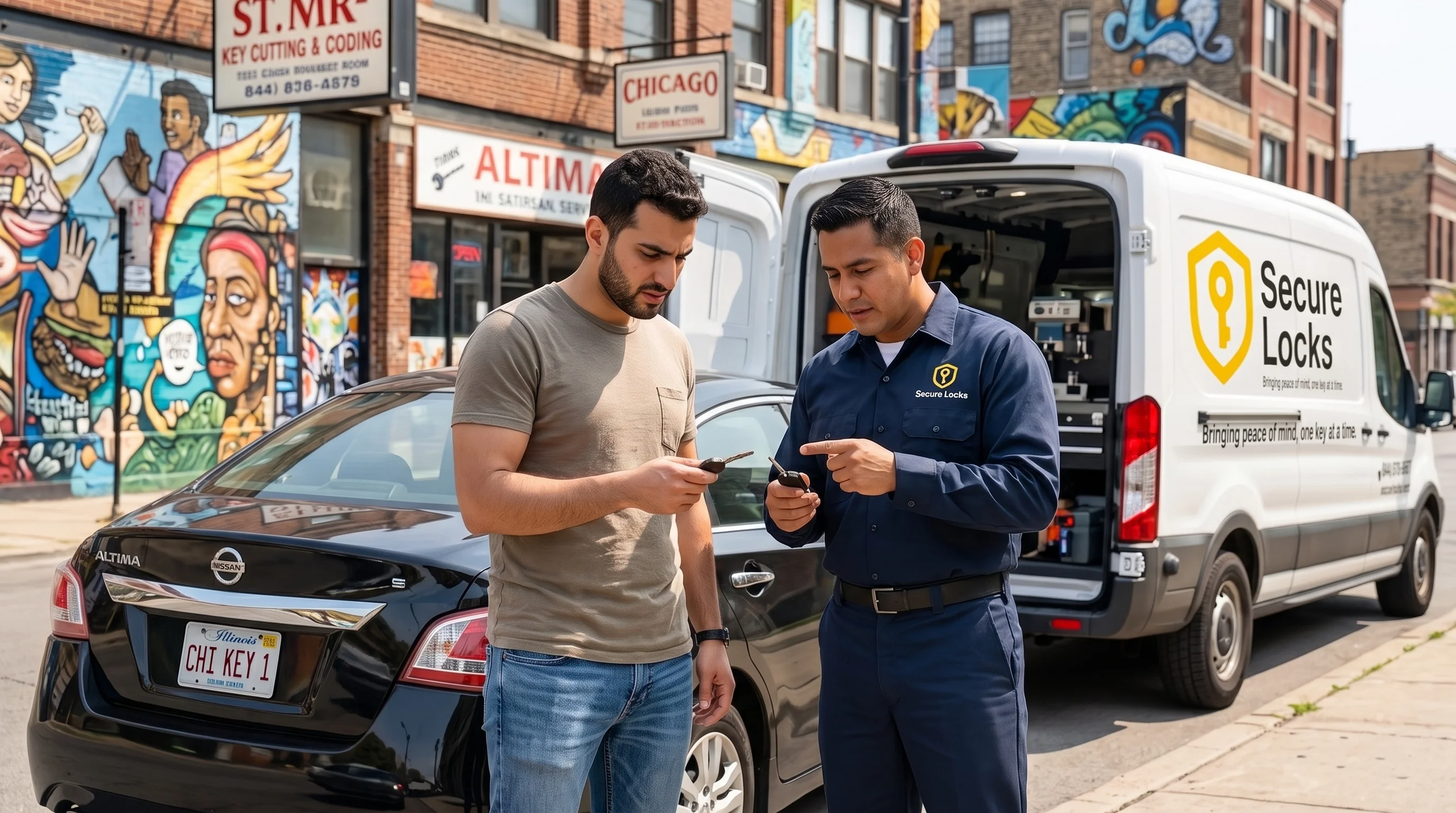
A spare car key is supposed to reduce risk, not create false confidence. Yet drivers sometimes discover that a duplicate unlocks the door but will not start the engine, that the remote buttons do nothing, or that the key works inconsistently only after the original has already been lost. The problem is usually not the idea of having a spare; it is assuming that key duplication means the same thing for every vehicle.
Modern automotive keys can combine a physical blade, transponder chip, remote-control electronics, proximity technology, and immobilizer authorization in a single device. For drivers in Chicago, a spare that has not been cut, programmed, and tested correctly may remain unnoticed for months until an actual emergency exposes the problem. Understanding the most common key duplication mistakes helps ensure that a backup is genuinely usable rather than simply another key-shaped object stored in a drawer.
Why Key Duplication Is More Complicated Than It Looks
With older vehicles, creating a duplicate was often primarily a mechanical task. If the new blade matched the original cuts closely enough, it could operate the locks and ignition. Many newer cars add electronic security systems that require the vehicle to recognize more than the shape of the key.
That difference is essential because modern key duplication may involve two distinct layers: mechanical compatibility and electronic authorization. A key can succeed at one and fail at the other. It may open the driver’s door because the blade is correct while the immobilizer rejects the transponder and prevents the engine from starting.
For Chicago drivers who have never needed a replacement before, that distinction may not become obvious until a spare is actually needed. The safest approach is to understand the vehicle’s key system first and verify every function afterward.
Key Duplication Mistake #1: Assuming Every Car Key Only Needs Cutting
One of the most common mistakes is treating a modern automotive key like a traditional house key. The visible blade naturally draws attention because it is the part that enters a lock, but many vehicles rely on a hidden transponder chip or electronic fob to authorize starting.
A copied blade can therefore be mechanically perfect and still be incomplete. If the vehicle uses an immobilizer, the new key may need programming before the engine recognizes it. Push-to-start vehicles can require an even greater emphasis on electronic compatibility because the fob itself is effectively the credential that tells the car an authorized key is present.
When key duplication involves a transponder or smart key, the objective should be to reproduce the necessary functionality, not merely the physical shape.
Key Duplication Mistake #2: Choosing the Wrong Key or Fob Type
Keys and fobs that look nearly identical are not necessarily interchangeable. A manufacturer may use similar housings across several models or years while changing the transponder type, operating frequency, button configuration, or internal electronics.
That means visual similarity is not enough to establish compatibility. Selecting a replacement based only on appearance can result in a key that cannot be programmed correctly or does not support the vehicle’s required functions.
Vehicle year, make, model, trim, ignition type, and existing key configuration can all help identify the correct replacement. This step becomes especially important when working with smart keys because electronic compatibility is fundamental to successful key duplication.
Key Duplication Mistakes with Transponder Keys
Transponder technology is designed to make unauthorized vehicle starting more difficult. A small chip inside the key communicates with the vehicle’s immobilizer system, and the engine is enabled only when the expected authorization is received.
Because the chip is usually hidden, it is easy for drivers to think only about the visible blade. That creates one of the biggest differences between traditional duplication and modern automotive duplication.
Key Duplication Without Programming Can Produce a Half-Working Spare
A half-working key can be more misleading than a completely nonfunctional one. The duplicate may enter the door, turn smoothly, and provide access to the cabin. That apparent success can lead the driver to store it away confidently without ever testing whether it starts the vehicle.
Months later, the primary key gets lost somewhere in Chicago and the spare is finally used. Only then does the driver discover that the immobilizer does not recognize it.
That is why programming and verification are critical when the vehicle uses a transponder. If electronic authorization is part of the original key system, successful key duplication needs to account for it.
Key Duplication Should Not Assume a Transponder Works Because the Blade Works
Mechanical operation proves only that the cut is compatible with the lock. It says nothing about whether the electronic chip is correct, programmed, or functioning normally.
This separation between mechanical and electronic systems is particularly important with vehicles that still use a traditional-looking ignition key but also contain an immobilizer. From the driver’s perspective, the key may appear conventional even though the vehicle expects an electronic response before starting.
Key Duplication Mistakes with Smart Keys and Remote Fobs
Smart keys introduce another layer of complexity because the driver may rarely use a physical blade at all. Instead, proximity sensors detect the fob and allow the vehicle to unlock or start when an authorized device is nearby.
A replacement that is not properly paired may therefore look identical to the original yet accomplish almost nothing.
Key Duplication Mistake #3: Testing Only the Lock and Unlock Buttons
Remote buttons are important, but they are only part of the test. A replacement fob might lock and unlock the doors correctly while failing to authorize push-button starting. Another key might start the vehicle but have nonfunctional remote buttons.
A dependable spare should be tested for every feature it is expected to provide. That can include lock, unlock, trunk release, panic function, proximity entry, push-button starting, and any physical emergency blade contained inside the fob.
Chicago drivers should not assume that one successful function proves the entire key is ready for use.
Key Duplication Mistake #4: Ignoring “Key Not Detected” Messages
Intermittent recognition problems should not be accepted simply because the vehicle eventually starts. A newly duplicated smart key should communicate consistently with the vehicle. If detection warnings repeatedly appear, the key may have a battery, programming, compatibility, or internal electronic issue.
The same principle applies when the key only works if it is held unusually close to the start button. Some vehicles provide an emergency recognition procedure for a weak fob battery, but repeatedly needing that procedure is not equivalent to normal operation.
A spare should provide confidence, not introduce another unreliable component into the driver’s routine.
Why Proper Key Duplication Matters More When Only One Key Remains
The risk of duplication errors increases in importance when the driver has already lost the original spare. If only one functional key remains, creating another dependable key restores redundancy. Creating an incomplete duplicate does not.
This is where car key replacement and duplication begin to overlap. When the existing key is damaged, unreliable, or the only surviving key, the process should focus on producing a fully functioning replacement that can actually take over if the original is lost.
For Chicago commuters, families, delivery drivers, and anyone who relies heavily on a vehicle, that distinction matters because a nonfunctional spare provides no protection against a future lockout or lost-key situation.
Key Duplication Mistake #5: Waiting Until the Only Key Is Already Failing
Drivers often postpone making a spare because the current key still works. That can become a problem when the remaining key has cracked housing, intermittent buttons, a worn blade, or inconsistent vehicle recognition.
Waiting until the last key is visibly deteriorating reduces the margin for error. If it fails completely before another working key has been created, a preventive duplication task can become a more complicated lost-key situation.
The better time to handle key duplication is while the existing key is still reliable enough to serve as a reference and while there is no immediate pressure to regain access to the vehicle.
Chicago Conditions Can Expose Weak Key Duplication Faster
A duplicate that performs marginally may seem acceptable under ideal conditions and become less dependable when Chicago weather becomes more demanding. Cold temperatures can expose weak fob batteries, while moisture can reveal compromised housings or electronics.
The city’s parking environment also makes reliability more important. A questionable spare may remain unused for months until the primary key disappears in a downtown garage, at an airport parking facility, or somewhere between errands. That is precisely the wrong moment to discover that the duplicate was never fully functional.
Key Duplication Should Be Tested Before a Chicago Winter
Cold temperatures can reduce the performance of weak batteries and make an already marginal fob seem less responsive. A spare that has sat unused for a long period may have a battery that is already depleted by the time it is needed.
Before Chicago winter conditions arrive, drivers who depend on an electronic spare should verify that the fob responds normally and that the vehicle recognizes it consistently. Testing the key periodically is more useful than assuming storage alone preserves its reliability.
Key Duplication Should Account for Physical Wear in Chicago
Road salt, snow, rain, crowded pockets, keys carried with heavy keychains, and repeated daily use can all contribute to wear over time. Although these conditions do not automatically destroy automotive keys, they can accelerate problems in a key that is already cracked or poorly assembled.
A duplicate should have a secure housing, properly fitted battery cover, stable blade, and buttons that respond without excessive force. If the key looks fragile from the beginning, it may not be a dependable long-term backup.
Key Duplication Mistake #6: Copying a Worn Key Without Checking Its Condition
A heavily worn original can create problems during duplication because its physical shape may no longer represent the key as accurately as it once did. Years of insertion, turning, dropping, and contact with lock components can gradually round edges or alter the blade.
A new duplicate based on a badly worn reference may inherit those imperfections. Depending on the vehicle and cutting method, that can lead to rough operation, sticking, or inconsistent turning.
Key Duplication Should Produce Smooth Mechanical Operation
A newly created blade should enter and turn without requiring unusual force. Difficulty should not be dismissed as something the key will simply “wear into.” Excessive resistance can indicate an inaccurate cut, an existing lock problem, or a key that needs closer inspection.
Forcing a poorly fitting duplicate can damage both the blade and the lock cylinder. The objective is smooth, predictable operation from the beginning.
Key Duplication Should Not Ignore a Sticky Lock
Sometimes the new key is blamed for a problem that already existed in the vehicle. If both the original and duplicate have difficulty turning the same lock, the lock cylinder itself may need attention.
That distinction matters because repeatedly modifying a correctly cut key will not solve a mechanical problem inside the vehicle. Testing both keys helps isolate whether the symptom follows the key or remains with the lock.
Key Duplication Mistake #7: Never Testing the Spare After It Is Made
This may be the easiest mistake to prevent. A new spare is created, placed in a drawer, and assumed to be ready. No one checks whether it unlocks the door, starts the vehicle, operates the remote, or works with the push-to-start system.
A proper test takes little effort compared with discovering a failed spare during a real lockout. Every intended function should be verified while the primary key is still available and the situation is controlled.
Key Duplication Should Include a Full Function Check
A useful test should reproduce how the key would actually be used. Mechanical blades should be checked in the appropriate locks. Remote buttons should be tested individually. The engine should start consistently, and smart-key detection should work without repeated warnings or unusual positioning.
If the key contains an emergency blade hidden inside a fob, that component is worth testing as well. Its purpose is to provide mechanical access when electronic entry is unavailable, so discovering that it does not fit during an emergency defeats the point.
Key Duplication Is Not Complete Until Reliability Is Confirmed
One successful start is encouraging, but consistency matters more. Starting the vehicle several times, checking remote operation from a reasonable distance, and confirming that no immobilizer or key-detection warnings appear provides a better indication that the duplicate is ready.
A spare exists for the moment when the original cannot be used. That means reliability should be judged more strictly than appearance.
Key Duplication Should Be Verified Before the Spare Is Stored
Once the duplicate has passed its functional checks, it can be stored securely. It should also be kept somewhere separate from the primary key. Carrying both on the same ring, in the same backpack, or inside the same purse removes much of the protection a spare is intended to provide.
Chicago drivers who regularly move between work, home, garages, and public spaces benefit more from a backup when it remains independently accessible.
Key Duplication Mistake #8: Forgetting About the Spare for Years
A spare key can deteriorate even when it is not used frequently. Batteries discharge, storage conditions change, housings can become damaged, and the vehicle itself may undergo electronic or security-related changes.
That does not mean a spare requires constant attention, but periodic verification is sensible. A key that has not been touched for several years should not automatically be assumed to work exactly as it did when stored.
Key Duplication Requires More Than Creating the Key Once
The purpose of a spare is readiness. Checking the key periodically keeps that readiness from becoming an assumption. For electronic fobs, battery condition is particularly important because a dead remote battery is one of the simplest reasons a stored spare may appear useless.
A replacement battery can often restore normal operation, but testing before an emergency ensures the driver knows that in advance.
When Key Duplication Becomes Car Key Replacement
The line between duplication and replacement is not always sharp. If a driver has one good key and wants another identical working backup, duplication is the obvious goal. If the existing key is damaged, missing, electronically unreliable, or no longer functioning, car key replacement becomes the broader task.
In both situations, the same principle applies: the final key needs to match the mechanical and electronic requirements of the vehicle. A spare that only performs half the job is not a dependable replacement.
Key Duplication Should Match the Vehicle, Not Just the Original Key’s Appearance
A replacement should be selected based on the actual security system used by the vehicle. Exterior shape can help identify a key family, but compatibility depends on what is inside as well.
That is why accurate vehicle information matters. Year, make, model, ignition style, and current key configuration can help determine whether the vehicle uses a traditional blade, transponder key, remote-head key, proximity fob, or another system.
Reliable Key Duplication Gives Chicago Drivers a Real Backup
The biggest mistake with key duplication is assuming that possession equals preparedness. A key sitting in a drawer is only useful if it can unlock the vehicle, satisfy the security system, and start the engine when the primary key is unavailable.
Chicago drivers can avoid most unpleasant surprises by treating duplication as a complete functional process. The correct key type should be identified, mechanical cuts should operate smoothly, electronic components should be compatible and programmed when necessary, and every intended function should be tested before the spare is stored.
That becomes even more important when only one original key remains. Chicago traffic, parking garages, winter weather, airport trips, and busy schedules can make an unusable spare especially disruptive when the primary key disappears. A properly handled car key replacement restores genuine redundancy, while careful key duplication ensures that the backup is ready to do its job when it finally matters.