

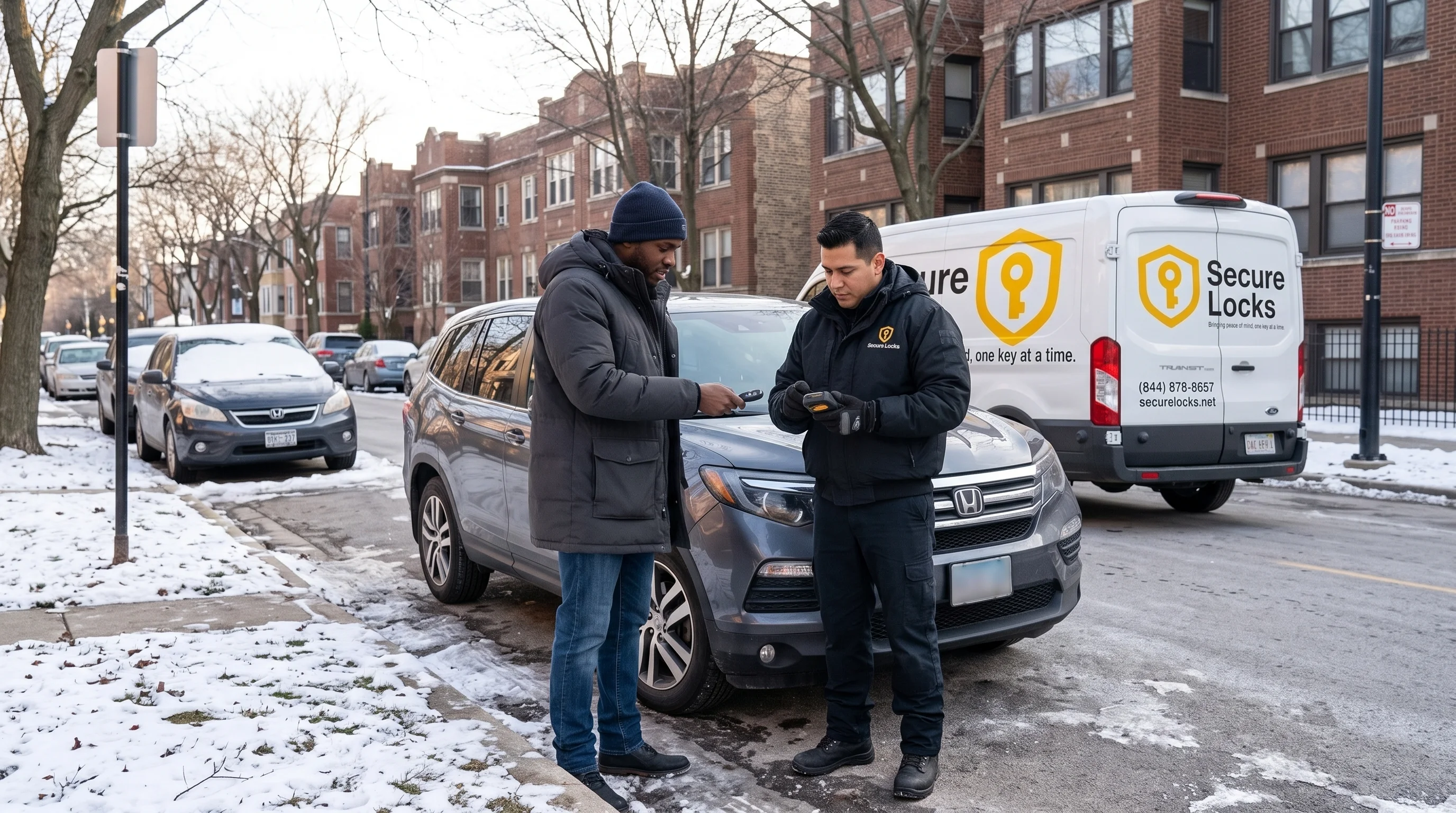
The first real freeze of the season usually arrives in Chicago around the third week of October, and with it comes a familiar set of morning surprises. Windshields need scraping, tire pressure warnings light up and, for a surprising number of drivers, the key fob suddenly stops cooperating. The doors will not unlock with the button, the dashboard shows a car key not detected warning or the remote works only when held right against the window. When this happens for the first time, many drivers assume the fob is broken or that the car has an electrical fault. In many cases the cold is exposing a weakness that was already there, and knowing how to tell the difference saves time before calling a car locksmith.
Cold weather does not usually destroy a healthy fob. What it does is reduce the margin that a tired battery, a worn contact or a marginal signal was relying on. A fob that worked fine at 60 degrees can fall below the threshold it needs at 25 degrees, and that is why the first freeze is when so many key problems show up at once.
How Cold Temperatures Affect a Key Fob
Most key fobs run on a small coin cell battery. Like all batteries, coin cells depend on a chemical reaction to produce power, and that reaction slows down as the temperature drops. The battery's voltage sags under load in the cold, which means the fob may not be able to transmit a strong enough signal when a button is pressed. A brand new battery usually has enough reserve to handle a cold morning. A battery that has been in service for a few years may not.
Temperature swings add a second effect. A fob carried from a warm house into freezing air, or from a cold car into a heated office, can collect a small amount of condensation inside its housing. Over time, that moisture can contribute to corrosion on the battery contacts or the circuit board, which leads to intermittent failures that are hard to pin down.
Why the Car Key Not Detected Message Appears
Vehicles with keyless entry and push-button start rely on a short exchange between the car and the fob. The car sends out a low frequency signal, and the fob answers. If the fob's reply is too weak, the car reports that the car key is not detected, even if the fob is sitting in the cupholder. On a cold morning, a weak battery is the most common reason for that message, but it is not the only one, so it helps to work through a short checklist before assuming the worst.
First Steps When the Key Fob Is Not Working
When a key fob is not working on a cold morning, a few simple checks can often get the car moving again and point to the real cause. Working through them in order also gives useful information to a technician if the problem turns out to be more than the weather, since each step rules out one possible cause and narrows down what is left.
Warm the Fob and Try Again
Holding the fob in a closed hand or an inside pocket for a few minutes can raise the battery's temperature enough to restore its output. If the fob starts working after being warmed, the battery is almost certainly the weak link, and it should be replaced soon rather than relied on through the rest of the winter.
Use the Backup Start Method
Most vehicles with push-button start have a backup method for starting the car when the fob battery is too weak. The owner's manual describes it for each model. On many cars, the fob is held against the start button or placed in a marked spot on the console where the car can read it at very close range. If the car starts this way, the fob's transponder is still working and the problem is power, not programming.
Use the Emergency Blade to Get Inside
Many fobs contain a hidden mechanical blade that opens the driver's door when the remote fails. It is worth knowing where that blade is and how to release it before a cold morning makes it urgent. Some cars hide the door lock cylinder behind a small cap on the handle, which may need to be removed first.
Check the Vehicle Battery Too
A cold snap is hard on car batteries as well. A weak vehicle battery can cause the car's modules to behave unpredictably, including trouble recognizing the fob. If the engine cranks slowly, the dashboard flickers or other warnings appear, the car's battery deserves attention before the fob is blamed.
When a Car Locksmith Is the Right Call
Sometimes the simple fixes do not work. A fresh battery goes in and the key fob still is not responding, the backup start method fails or the fob responds only some of the time. Those are signs that the problem goes beyond the battery. Corroded contacts, a cracked solder joint from a drop or moisture damage on the circuit board can all produce symptoms that look like a cold-weather issue but persist after the weather warms up.
At that point, an automotive locksmith can test the fob and the car to find the source. A qualified car locksmith in Chicago can usually tell whether the fob can be repaired, whether a new battery and housing will solve the problem or whether a new key needs to be programmed to the car. If a new key is needed, the technician will verify ownership, prepare and program the key and test every function before the job is complete.
Reading the Key Fob Not Working Pattern
The way a fob fails says a lot about the cause. A key fob not working only on the coldest mornings and recovering by afternoon almost always points to a tired battery. A fob that fails at random, regardless of temperature, points to a loose contact, moisture damage or a failing circuit board. A car key not detected message that appears only in one parking spot, such as a particular garage level, can point to radio interference in that location rather than a problem with the key. Keeping track of when and where the problem happens for a few days makes the next step much clearer.
Signs the Fob Itself Has Failed
A few patterns point strongly toward a failing fob rather than a cold battery. The fob works intermittently even indoors. One button works while others do not. The car recognizes a spare key normally while the main key keeps failing. The fob has a history of drops or water exposure. When these signs appear, replacing the battery again is unlikely to help.
When the Car Is the Problem
If the spare key shows the same symptoms as the main key, the car may be at fault. Antennas used for keyless entry, the receiver for the remote signal and the wiring that connects them can develop problems, and a weak vehicle battery can make all of them less reliable. A car that refuses to detect any key, even with the backup method, needs a closer look at the vehicle itself.
Preparing for Winter Before the Cold Arrives
The first freeze is a useful warning. A key fob that struggles on the first cold morning will likely struggle more in January, when Chicago temperatures regularly fall well below freezing. Taking a few steps now can prevent a problem at the worst possible time.
Replace Fob Batteries Before Winter
Replacing the fob battery each fall is a simple habit that prevents many cold-weather failures. The owner's manual lists the correct battery type. It is worth buying from a reliable source and installing the battery carefully, with the correct side facing up and the contacts clean.
Keep a Spare Key Ready
A working spare key is the best backup for any key problem, cold or otherwise. If the main fob fails on a frozen morning, a spare stored at home can get the car moving while the main key is sorted out. Households with only one key should consider adding a spare before winter, since adding a key while one still works is usually simpler than replacing the only key after it fails.
Carry the Fob Close to the Body
Keeping the fob in an inside pocket rather than an outer coat pocket helps it stay warmer and reduces the chance of a weak battery dropping out. It also keeps the fob away from snow and slush that can work their way into the housing over the course of the season.
Cold Mornings, Chicago Driving and When to Call a Car Locksmith
Chicago winters bring a combination of cold, moisture and road salt that tests every part of a car, including the key. Drivers who park outside overnight, especially in neighborhoods without garages, are most likely to see fob problems on the first freeze. Drivers who move between heated garages and frozen outdoor lots during the day may see problems tied to condensation and temperature swings.
Whatever the pattern, the approach stays the same. Warm the fob, try the backup start method, check the car battery and replace the fob battery if it is more than a year or two old. When the key fob is still not responding after those steps, or a car key not detected warning keeps appearing even with a fresh battery, a qualified car locksmith can test the fob and the vehicle and determine whether repair or a new key is the right answer.