

A BMW key stopped being a simple piece of cut metal a long time ago. Most models from the last two decades use a remote with a transponder chip inside, and many newer ones rely on a smart key that has to identify itself to the car's security modules before the engine is allowed to start. When one of those keys disappears or stops working, the first question most owners in Chicago ask is where to go for car key replacement: back to the dealership, or to a locksmith who works on BMW security systems. Both routes can end with a working key in hand, but the path, the timeline and the amount of disruption can look very different depending on the situation.
The right choice usually comes down to three factors. The first is how many working keys are left. The second is the model and generation of the vehicle, since BMW has changed its immobilizer architecture several times. The third is where the car is sitting when the problem shows up. A sedan parked in a private garage in Lincoln Park with a spare key in a kitchen drawer is a very different case from an SUV stranded on a side street in Pilsen with no key at all and a street cleaning sign on the corner.
How BMW Keys Are Tied to the Car
Every BMW key does two separate jobs. The remote portion sends lock, unlock and trunk commands, and the transponder portion proves to the car that the key belongs to it. That second job is handled by a security module that stores the identity of each authorized key. Older models used a system known as EWS, a long run of vehicles from the mid 2000s into the mid 2010s used the Car Access System, commonly called CAS, and newer platforms moved that function into body control modules referred to as FEM and BDC. Each of these generations handles key data in its own way, and that difference affects who can create a new key and how long the process takes.
Because the module holds the list of approved keys, a new key cannot simply be cut and handed over. It has to be introduced to the car, either by writing the correct data to a blank key or by adding the key to the module's memory. On some generations this can be done with the car on site using specialized programming equipment. On others, the process involves more steps, such as reading data from the module or communicating with the manufacturer's systems.
Why Coding Matters as Much as Cutting
Many BMW keys still carry a mechanical blade, usually hidden inside the fob, for the driver's door and sometimes the glovebox. A blade cut to the correct pattern will open the door, but it will not start the engine unless the electronics have been coded to match. This is the point where a lot of owners get confused, because a key that opens the door feels like a finished key. In reality, the coding step is what separates a key that lets the driver sit in the car from one that lets the driver leave in it.
What the Dealership Route Looks Like
A BMW dealership handles key replacement through the manufacturer. The service department typically verifies ownership, confirms the vehicle identification number, and orders a key produced for that specific car. Depending on the model, that key may arrive already coded or may need to be finished in the service bay once it arrives. Ordering, shipping and scheduling can add days to the process, and the timeline is often set by the service department's calendar rather than the owner's.
When at least one key still works, the dealer route is mostly a matter of patience. When every key is gone, the car usually has to be brought to the dealership, and a car that cannot be started means arranging a tow. In a dense city, that can involve coordinating access to a parking garage, working around permit zones, and leaving the vehicle at the service center while the new key is ordered and coded.
When the Dealer Is the Practical Choice
There are cases where the dealership is simply the better fit. Very new model years sometimes use security systems that independent tools do not yet fully support. A vehicle that is already scheduled for warranty work can have the key handled during the same visit. If a security module itself has failed and needs replacement, that repair often belongs in a service bay regardless of who supplies the key. Owners who want a factory-sourced key for every function, including features tied to driver profiles, may also prefer the dealer route.
What a BMW-Capable Locksmith Brings to Car Key Replacement
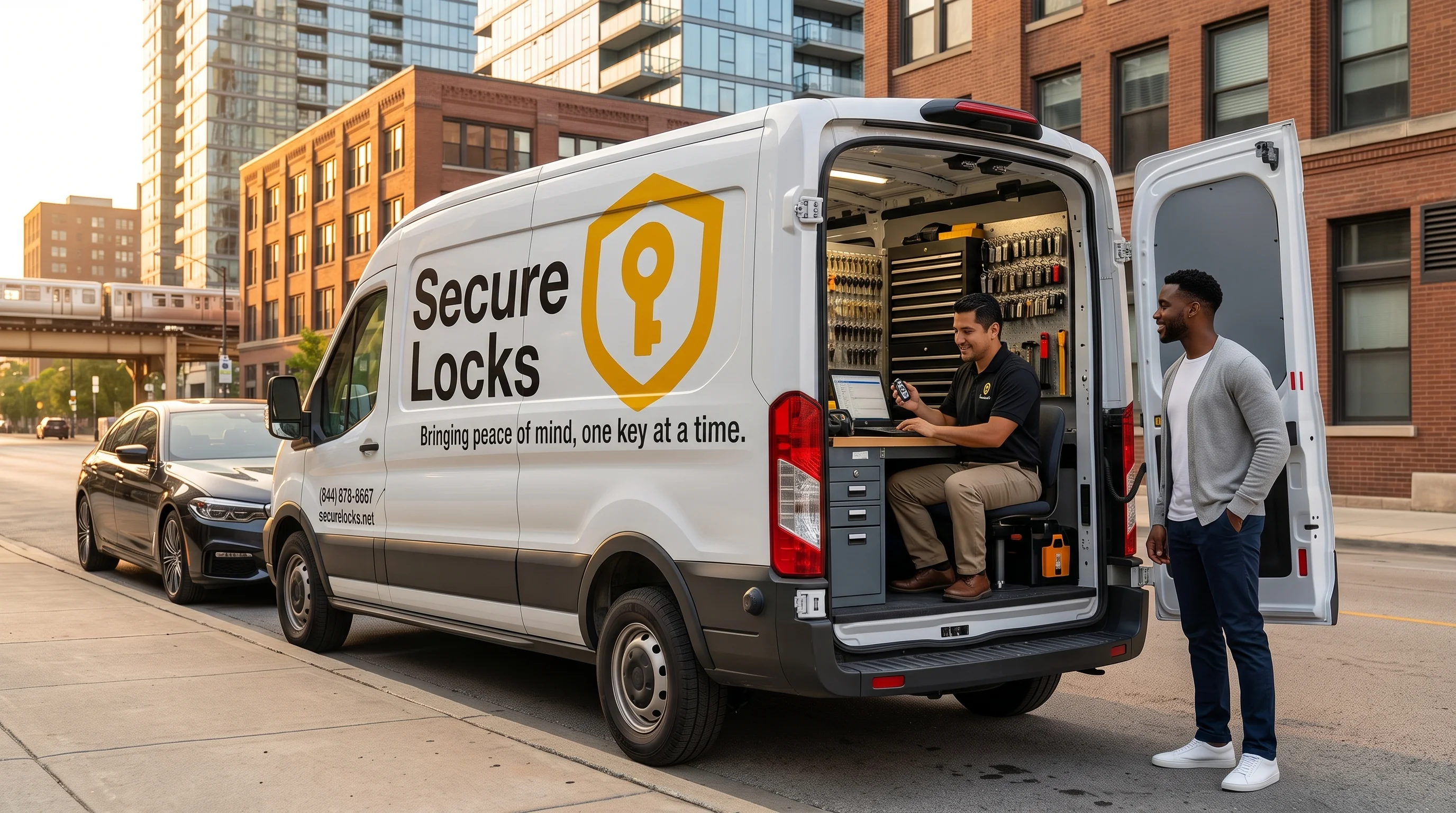
An automotive locksmith equipped for European vehicles approaches the same problem from a different angle. Instead of ordering a key and waiting for it to ship, a locksmith with the right equipment can often read the key data from the car's security module, prepare a compatible key, cut the emergency blade and complete the programming with the car where it sits. For many CAS and FEM era vehicles, that means a new key can be working the same day, including in some situations where no working key remains.
Mobility is the other major difference. A locksmith who comes to the vehicle removes the need to tow a car that cannot start. For owners in Chicago, that matters when a car is parked on the street, in a shared building garage, or at a workplace lot where it cannot sit for several days. The work is done in place, the key is tested on every function, and the car can be driven away once everything checks out.
Questions to Ask Before Booking
Not every locksmith works on BMW systems, and capability varies with model and year. A short conversation before booking prevents wasted time on both sides. It helps to ask whether the locksmith regularly handles the specific series in question, whether the job can be completed on site, and what happens if the security module requires additional steps.
Confirming the Model Year and Security System
The model year, the series and the vehicle identification number are the most useful details to have ready. With that information, a technician can usually identify which security generation the car uses and explain whether the key can be added from an existing key, generated with no key present, or better handled through the manufacturer. A clear answer at this stage is a good sign that the provider understands the vehicle.
Having Ownership Documents Ready
Any legitimate provider, dealer or locksmith, will ask for proof that the person requesting the key has the right to it. A valid photo ID along with the title or current registration is standard. Having these documents available before the appointment keeps the process moving and protects owners from anyone attempting to obtain a key for a car that is not theirs.
Comparing the Two Routes Side by Side
Looking at the options together makes the tradeoffs easier to see. The dealership offers a factory process and is the dependable path for the newest systems, but it usually requires the vehicle to be at the service center, runs on an ordering timeline and may require towing when no key is left. A qualified locksmith offers speed and on-site service for a wide range of models, which avoids towing and long waits, but the owner needs to confirm the locksmith's experience with that particular series before the appointment.
Key quality is another point worth raising. Some locksmiths supply original manufacturer keys, while others use high-quality aftermarket keys designed for the same system. Both can work well, but it is reasonable to ask which type will be supplied, which functions it supports, and whether the work comes with a guarantee. Remote locking, trunk release, comfort access and engine start should all be tested before the job is considered complete.
Car Key Replacement Situations Common Around Chicago
City driving creates its own patterns. Keys get lost at crowded events, left in rideshare vehicles, dropped in snowbanks or taken along with a bag from a gym locker. In winter, a key that falls into a pile of plowed snow near the curb may not be found until spring. Because street parking in Chicago often comes with time limits, permit rules and street cleaning schedules, a car that cannot be moved quickly can turn a lost key into a ticket or a tow.
In those situations, the ability to have a key made where the car sits tends to decide the matter. Owners with a car in a private garage and a working spare can usually wait for a dealer appointment. Owners with a car blocking a driveway, sitting in a metered spot or parked in a lot that closes overnight usually need the faster option.
When Only One Key Is Left
The most useful step any BMW owner can take is to add a second key while one still works. Adding a key to a car that already has a working key is generally simpler, faster and less disruptive than recovering from a situation where every key is gone. It also removes the pressure of making a decision in an emergency, when time and location limit the choices.
For drivers weighing the two routes, the practical rule is straightforward. When the car is the newest generation, under active warranty service, or has a failed security module, the dealership is often the right call. When speed matters, the car cannot be moved, or the model is well supported by independent equipment, a BMW-capable locksmith is usually the more convenient path to car key replacement in Chicago.