

The Audi A4 has been one of the most common compact luxury sedans on Chicago streets for more than two decades, which means its keys span several generations of technology. An early 2000s A4 uses a flip key with a transponder chip, a mid-generation A4 adds a more advanced remote and immobilizer, and recent models offer keyless entry and push-button start. When an A4 key stops working, the cause can sit in any of three places: the remote fob, the transponder that identifies the key to the immobilizer or the programming that ties the key to the car. Understanding which one has failed is the difference between a quick fix and a full car key replacement.
Each of those three parts fails in its own way and produces its own symptoms. A remote that will not lock the doors points to one thing. A key that turns in the ignition but will not start the engine points to another. A key that suddenly stopped working after a battery change points to something else entirely. Reading those symptoms correctly is the fastest route to the right solution.
How an Audi A4 Key Works
Every A4 key performs two jobs. The remote portion sends lock, unlock and trunk signals by radio when a button is pressed. The transponder portion, a small chip inside the key, answers a coded challenge from the immobilizer when the key is in the ignition or, on keyless models, inside the cabin. The immobilizer checks that response against its stored list of authorized keys and only allows the engine to start if the key matches.
These two functions are independent. The remote can fail while the transponder keeps working, and the transponder can fail while the remote keeps locking and unlocking the doors. That independence is useful for troubleshooting, because the pattern of what works and what does not narrows the cause quickly.
Differences Across A4 Generations
Older A4 models use a flip key, with the blade folding into the fob, and a transponder system that is widely supported by independent programming equipment. Later generations moved to a more integrated key and immobilizer design, and recent models with keyless entry add antennas around the car that communicate with the fob as the driver approaches. Newer A4 vehicles add further layers of security to key authorization, which experienced locksmiths handle with up-to-date programming equipment. The model year is the single most useful detail when diagnosing any A4 key problem.
Fob Problems: When the Remote Stops Responding
When the lock and unlock buttons stop working but the car still starts normally, the remote portion of the key is the likely cause. The most common reason is a weak battery. Symptoms include shorter range, buttons that need to be pressed several times and a warning in the instrument cluster on some models. Chicago winters accelerate this, since cold temperatures reduce battery output, and many drivers first notice remote problems on a frozen morning.
Replacing the battery with the type specified in the owner's manual often restores the remote. Many Chicago owners make a habit of changing the battery each fall, before the first freeze, so that a tired cell does not fail on the coldest morning of the year. If a new battery does not restore the remote, the next suspects are the battery contacts, which can corrode or lose tension, and the buttons themselves, which wear over years of use. Flip keys have an additional weak point in the hinge mechanism, which can loosen until the blade no longer locks in place.
Physical Damage to the Fob
A4 flip keys see a lot of wear. The housing can crack, the buttons can tear and the blade can work loose. When the electronics still function, moving the internal board into a new housing often solves the problem without changing the key's programming. When the board has been cracked by a fall or damaged by water, a new housing only covers up a failing component.
Transponder Problems: When the Car Will Not Start
When the remote works but the engine will not start, or the immobilizer warning light stays on, the transponder is the likely cause. The car is not recognizing the key's identity, even though the key fits and turns. On keyless models, the dashboard may report that no key is detected.
Transponder chips are durable, but they can be damaged by impact, by moisture or, occasionally, by strong magnetic or electrical exposure. On some keys, the chip can also become dislodged from its position inside the housing after a drop. A key with a failed transponder usually cannot be repaired in a practical way, and the solution is a new key programmed to the car.
Testing With the Spare Key
The quickest way to separate a key problem from a car problem is to try the spare. If the spare starts the car normally, the original key's transponder is almost certainly at fault. If the spare also fails, the issue may be in the car, such as the immobilizer antenna around the ignition, the immobilizer module itself or the vehicle's electrical supply. A weak car battery can cause confusing immobilizer behavior, especially in cold weather.
Signs the Car Is the Problem
Several patterns point toward the vehicle rather than the key. Every key fails in the same way. The immobilizer light flashes even with a known good key. Other electrical warnings appear at the same time. The problem started after other electrical work on the car. In these cases, replacing the key would not help, and the car needs to be inspected first.
Programming Problems: When a Working Key Loses Its Link
Programming problems sit between the fob and the transponder. A key can be physically sound and still fail because the car no longer recognizes it, or because a new key was never fully programmed. This sometimes happens after a key is added incorrectly, after control module work or when a used key from another A4 is tried in a different car.
Used keys deserve a specific warning. Audi keys are typically tied to the vehicle they were originally programmed for, and many cannot simply be reused on another car. Buying a used A4 key online often ends with a key that fits the ignition but cannot be accepted by the immobilizer. Talking with a qualified provider before buying any key avoids that frustration.
What Programming an A4 Key Involves
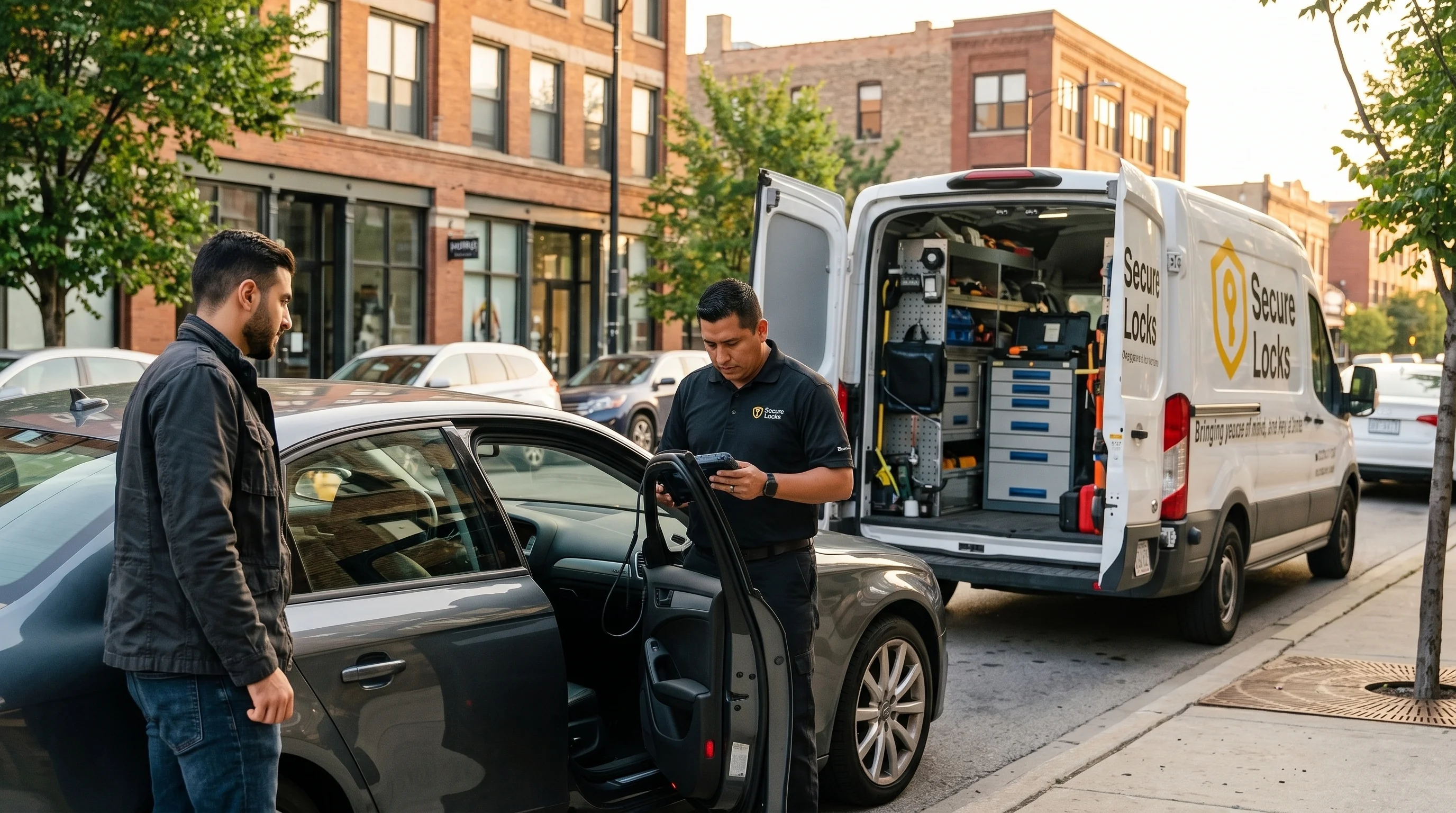
Programming adds the key to the immobilizer's list of authorized keys and pairs its remote functions with the car. For many A4 generations, a qualified automotive locksmith with the right equipment can do this on site. Some newer models involve additional steps, and a locksmith experienced with Audi will confirm the procedure for the specific car before the appointment. Having a working key available usually makes programming simpler than an all keys lost situation. Going through a dealership usually means ordering the key, booking a service appointment and, if no key works, towing the car to the service department. A locksmith who programs the key where the A4 is parked removes those steps and usually has the car running the same day.
Documents Needed for Programming
Any reputable provider will verify ownership before programming a key. A valid photo ID and the title or current registration are the standard documents. The vehicle identification number identifies the model year and immobilizer generation, which determines the correct key and procedure.
Testing After Programming
Once a key is programmed, every function should be tested: remote lock and unlock, trunk release, engine start, keyless entry and start where equipped, and the emergency blade in the driver's door. A key that passes every test before the technician leaves is far less likely to cause a surprise later.
When Car Key Replacement Is the Right Answer for an A4
Replacement makes sense when the transponder has failed, when the fob's circuit board is damaged, when the key has been lost or stolen or when repeated repairs have not solved an intermittent problem. A new A4 key must be cut to match the car's locks, prepared for the correct immobilizer generation and programmed to the vehicle.
If the original key was lost or stolen, it is worth asking whether it can be removed from the car's memory once the new key is added. That prevents anyone who finds the old key from using it to open or start the car, which matters in busy Chicago neighborhoods where a lost key could end up in someone else's hands.
Car Key Replacement Timing for A4 Owners
Timing affects how smooth the job is. When at least one working key exists, adding a new key is usually straightforward, because the existing key can help with cutting the blade and authorizing the new key. When every key is gone, the technician has to cut the blade by code or by decoding the lock and reach the immobilizer data without an authorized key present, which takes longer. For that reason, A4 owners who are down to a single key benefit from adding a spare while the remaining key still works. Location matters too. A car parked in a private driveway gives plenty of room to work, while a car on a busy Chicago street or in a tight underground garage may need some planning around access and parking rules before the appointment.
A Practical Troubleshooting Order
Working through the problem in order saves time. Start with a fresh fob battery. Inspect the housing, buttons and contacts. Try the spare key to see whether the problem follows the key or stays with the car. Check the car's battery if other electrical symptoms appear. If the spare works and the original key still fails after these checks, the original key needs repair or replacement.
For Audi A4 owners in Chicago, where cold winters and daily wear test every key, keeping a working spare is the simplest way to avoid being stranded. When the fob, the transponder or the programming has failed, a properly prepared and programmed new key restores every function, and that is the point where professional car key replacement becomes the dependable solution.